Imagine telling someone in August 1991, days after Terminator 2: Judgment Day arrived in cinemas, that if they wanted a decent game depicting the story of the film, they’d have to wait 34 years.
CAN YOU IMAGINE.
Well with the recent release of Terminator 2D: NO FATE, developed by Bitmap Bureau, that’s exactly what’s happened.

No Fate not only follows the main plot points of the film, in a fun, addictive and logical manner, but it also expands on the story, managing for example, to fill in part of the time between the first and second film. Drenched in atmosphere and visuals that are somewhere between a 16 and 32 bit game, No Fate is a title, worthy of the film licence, albeit a very late one.
Why the Original T2 Games Were All Over the Place
The original T2 games however, well, not only were they were far less appealing, but they were all over the place. We had six distinctly different T2 games, and I don’t mean, different platforms, I mean five very different games, released for various systems. Some were more successful than others, but none of them really working out like they should, and that’s because of one very important reason.
For Nintendo, LJN took up rights of the Game Boy, NES and Super Nintendo outings.
Whilst in the Sega camp, Flying Edge took the Mega Drive, Master System and Game Gear releases.
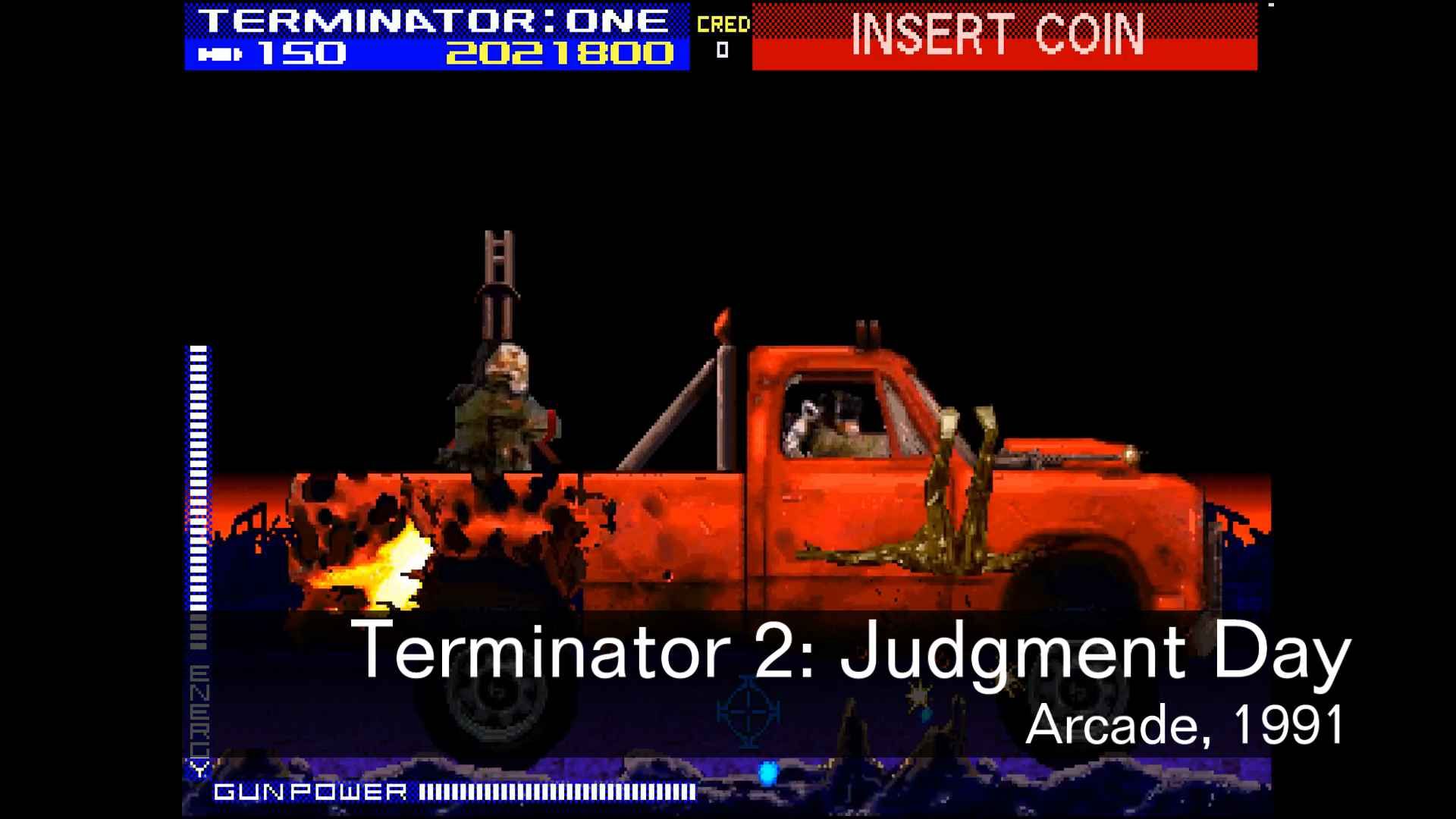
Due to the popularity of the film, we also had a port of appropriately named T2: The Arcade Game released on both the 16 bit consoles, perfectly suited to their new light gun accessories; The Nintendo Super Scope and the Sega Menacer. Now these games are a different beast. They don’t really follow the story of the film, but they are in fact, fun games to play.
The other games are mostly utter tripe.
The European Home Computer Versions
But there was another set of releases, which arguably did a better job of translating the film, and a better job of offering a reasonable gameplay experience. They were also the first move tie-ins to be released, with the ZX Spectrum game actually launching at the same time as UK theatre showings of the film.
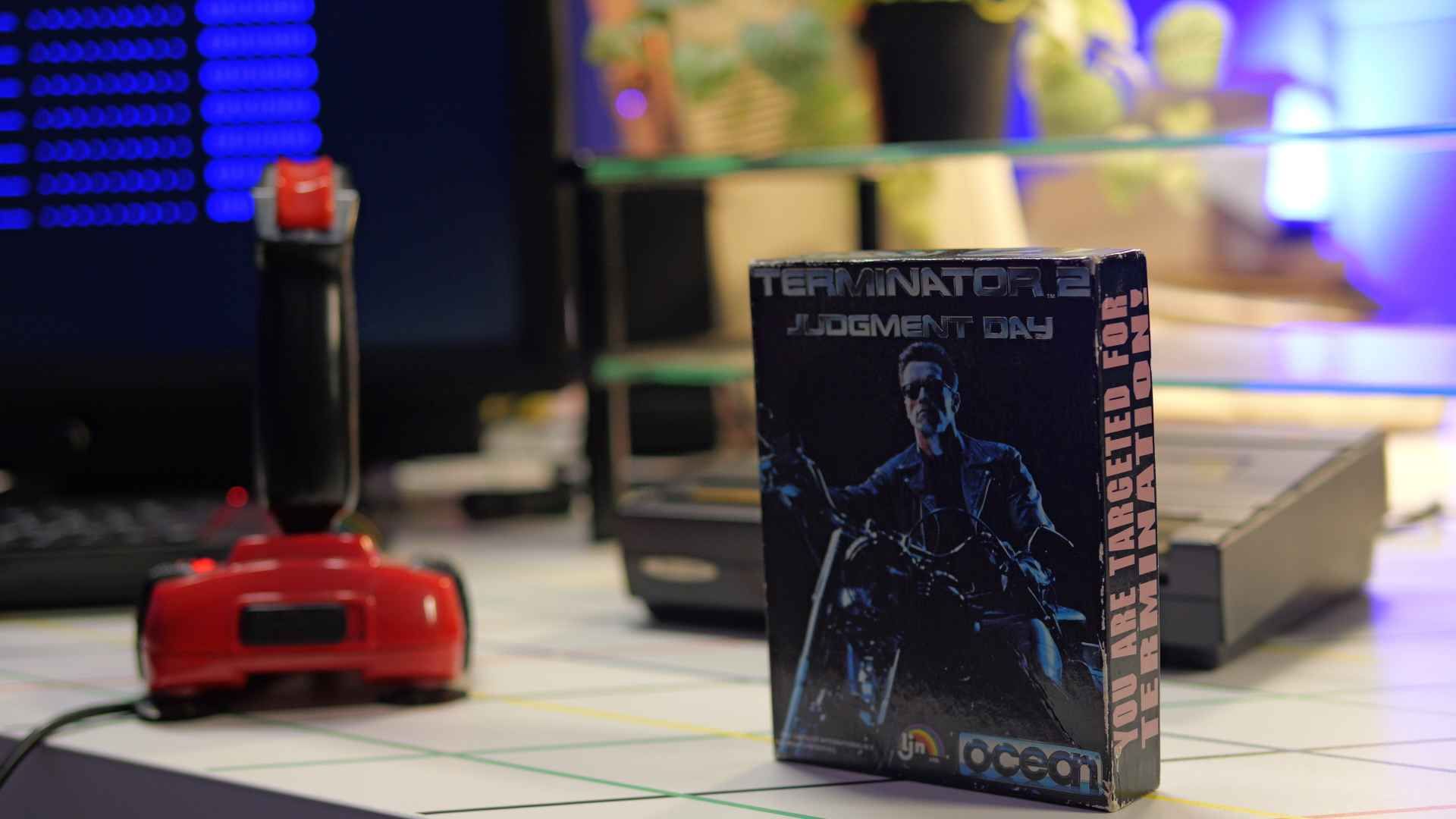
We’ll discuss it more later, but it’s clear that Terminator 2D: No Fate, takes inspiration from all of these games, along with some other well known titles, and indeed the film itself. Taking four years to develop, it’s clear the team spent a lot of time nurturing something that fans would connect with.
However, these original releases were developed in a very different environment. Fortunately some of the development process was covered in the UK magazine Your Sinclair’s September 1991 edition.
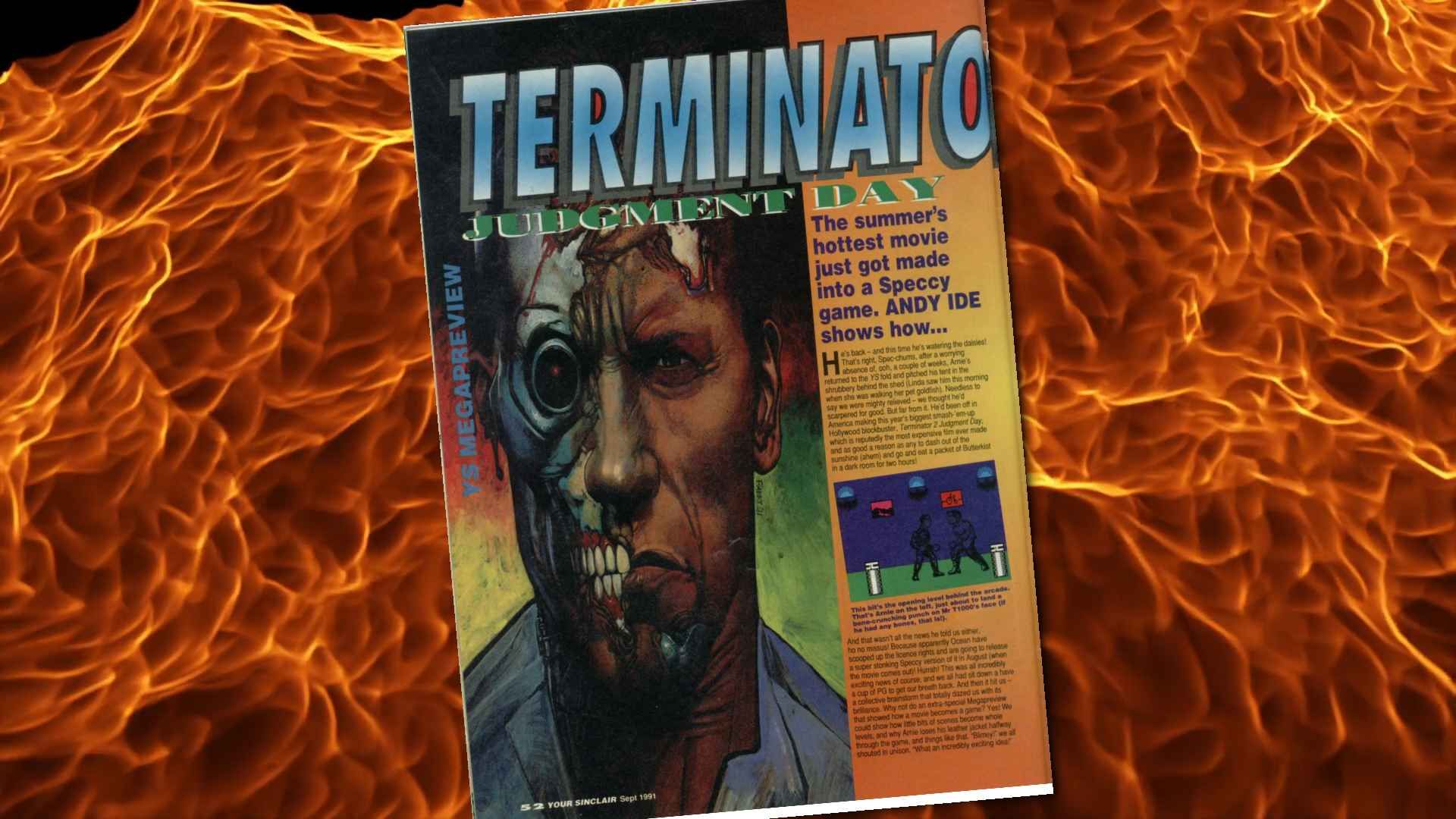
The company tasked with development of the European home computer ports was called Dementia Software (it was the 90s). A UK outfit who had worked on various conversions for the Atari ST, Amiga, Commodore 64, Amstrad CPC and ZX Spectrum, and the game actually paired with the on screen story reasonably well, apart from some weird looking locations, which we assumed were limitations of the machine or designers, but that’s not totally the case.
The first level is a one on one fight between the T1000 and errr, T101, yeah, ok, at the shopping mall. Limited by one fire button, your action is dependant on your proximity to the T1000.
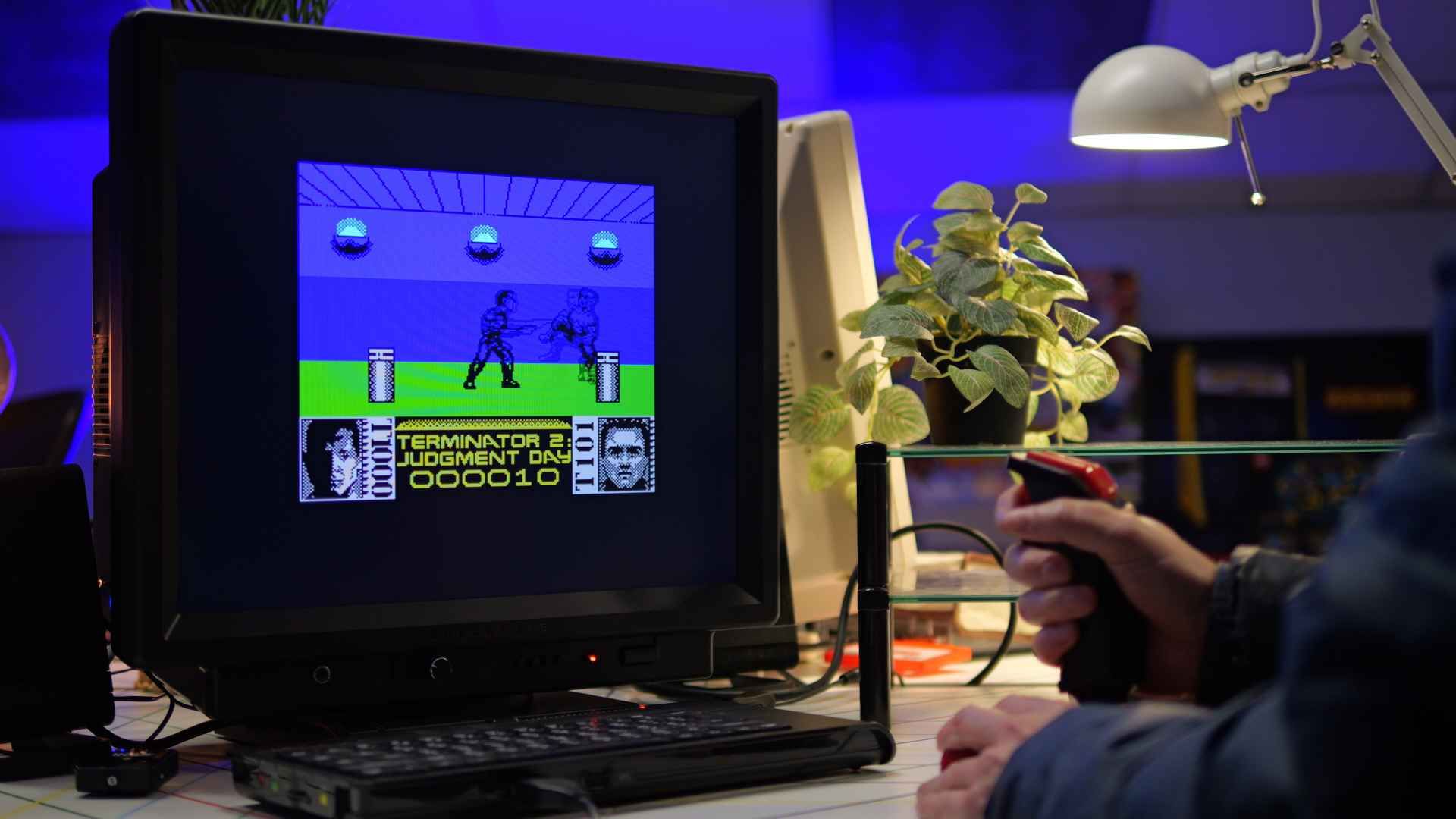
We then move onto The Flood Channel. A vertical scrolling dodge fest with the T1000 chasing us down. Again, similar to the film, plus we get the benefit of having a health bar for both Arnie and John.
Next we’re in a Safe Haven. Which feels more like a scene from the first movie, where we have to repair Arnie’s arm by matching the top image to the bottom.
Then back to a fist fight, this time in the hospital. Yep, back on track with the T2 plotline. Although there isn’t really an actual fight between the two in the film.
Then again, we’re back to the first movie, this time having to repair Arnie’s face and eye, be essentially solving one of those little slot puzzles.
The Freeway is next, another familiar scene. It’s the same as the Flood Channel but this time we’re being chased in a helicopter.
Our last level is in the Steel Mill, where we’re back to fist fighting.
If we complete that, then we get a digitised still of the T1000 about to fall into the molten metal. Glorious stuff.
So we get the main parts of the T2 story, but it feels incredibly disjointed, and repetitive. But there’s a reason for both of these.
Ocean, a Script-Only Brief, and Six Months on the Clock
Kevin Bulmer, the Director of Synthetic Dimensions, that Dementia Software was a label under, actually went to Ocean Software to ask if they would fund their creation of a D&D Arcade Adventure game. Ocean’s answer was “fine” as long as they developed Terminator 2 for them first.
A British developer and publisher established in 1983; Ocean were synonymous with movie licence tie-ins at the time, scooping them up left right and centre. This one they had successfully purchased from LJN. But, this was also a time when game licences weren’t really recognised as important pieces of the puzzle, especially on home computer formats, and so, they were sold off to the highest bidder to whatever small group of publishers wanted it, and having connections definitely helped. Ocean had published some pretty good games in the past, such as Batman and Robocop, but their quality varied dramatically, and they had a reputation for pumping titles out pretty quickly.
Dementia were given just six months to get T2 ready, and to aid them were given nothing more than a script of the movie. At this point the movie wasn’t even out in North America, let alone Europe, where releases tended to lag at least a month behind.
Because of this, one of Bulmer’s first ideas was to create a shooter game, where we see the re-programmed Arnie attempting to get from the Resistance base, through all the struggles to get to the time machine, in order to beat the T1000. This would have been pretty cool, but Ocean, being Ocean, wanted a multi-level game that followed the script, a lot like their previous licenced titles.
But a script, with no visuals leaves a lot to interpretation, and this is evident, especially in the pre-release stills, where the shopping mall has a nice picture of a Penny Farthing and mountain in the background. Very quaint. It’s also evident in the levels which are very much borrowed from the first movie, given that’s a much more solid frame of reference.
But what Bulmer worked out was that this was essentially a chase movie, broken up by fights between Arnie and the T1000. Even so a lot of the game was guesswork.
For example, in the script, the Truck chase scene feels like it happens very quickly, in fact Bulmer references this in an interview;
“The motorbike/truck chase is a case in point. In the movie, it doesn’t last long – Arnie scoots down into the water channel wit John Connor on the track and the truck comes bombarding over the bridge and explodes. It’s big action stuff, but only lasts a couple of seconds. Still, the potential’s there for some serious funk – let the lorry live a little longer and you can have it chasing Arnie down the flood channel hell for leather”
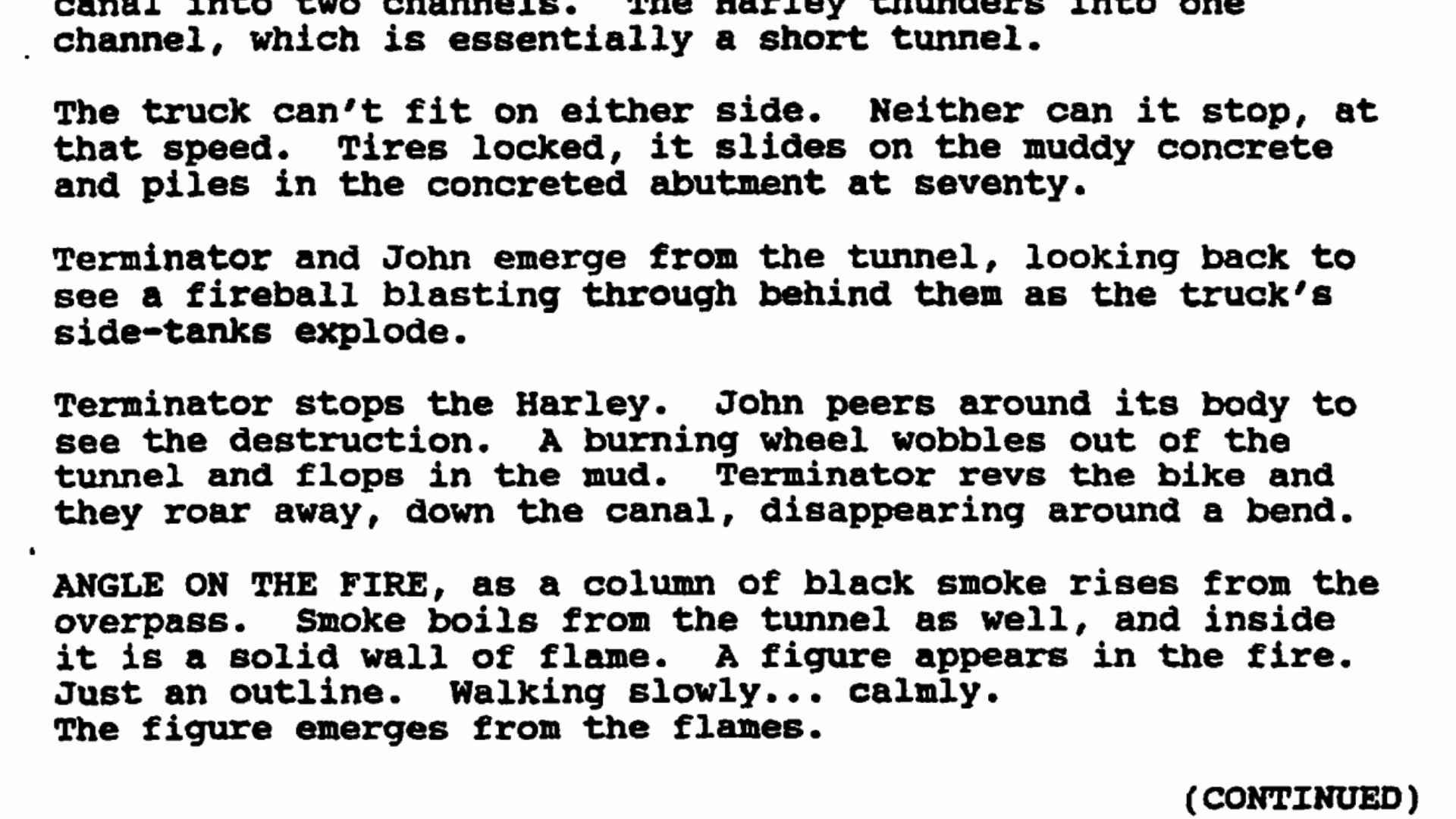
So, this section then it seems, although it’s actually quite close to the film sequence, was only developed that way because it made sense, which is pretty crazy if you think about it.
Towards the end of development, the team did actually manage to get hold of a pirate trailer on video, which helped them tie the game more to the film.
“That helped a bit – it showed me what the T1000 looked like when it turns all watery, so I incorporated that into the beat-em-up bits. It also helped with some of the lighting and colours, but it wasn’t really enough. And you’re obviously going to make mistakes. For example, we did the helictoper bit in daylight – in the movie, it happens all at night! – it simply hadn’t been written into the script”
“I thought Arnie lost his leather jacket halfway through the movie, so in the game I made him wear this tattered top in the second half. Again, I was wrong”
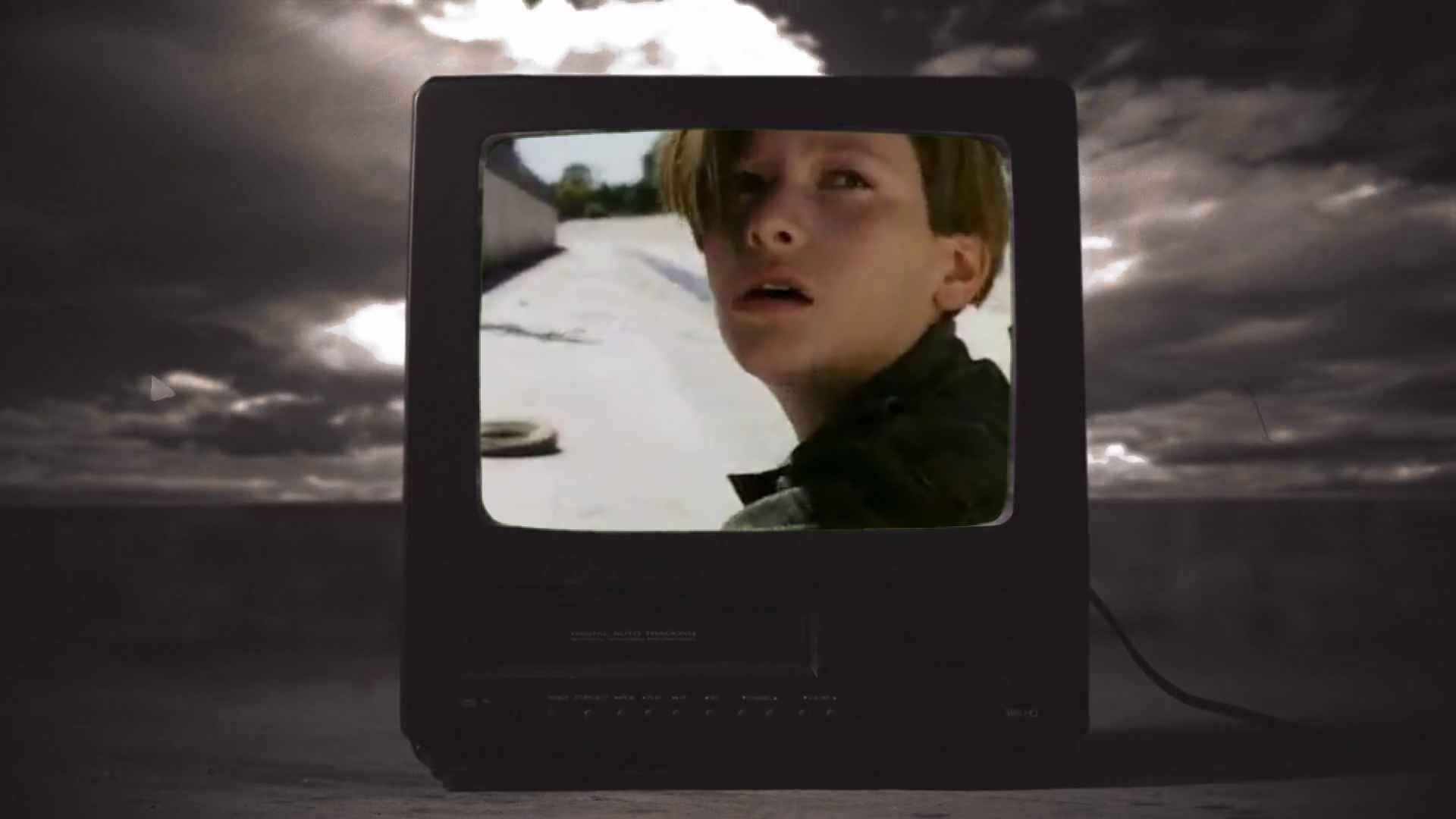
It’s pretty shocking what little designers and developers had to go on back then. The fact that Dementia had to source a pirated trailer really demonstrates how little the Film Studio cared about these interactive interpretations of the film.
It was really down to the publishers and developers in how they produced the game. As long it made money, and kept kids happy then the job was considered done.
However the trailer did allow the game to more closely resemble it’s material. With those digitised images copied from the trailer and thrown in to make the story more coherent.
Generally the Speccy version was reviewed pretty well by the press. With the Amstrad version being largely the same, just benefitting from the machines improved visual finesse.
Despite the Spectrum version being first out the door. Each of these home computer ports were derived from the Atari ST version programmed by Bulmer himself, with other programmers handling the other systems.
Gary Priest for the ZX Spectrum and Amstrad CPC, Bobby Earl for the Commodore 64 and Richard Costello for the Amiga and DOS releases.
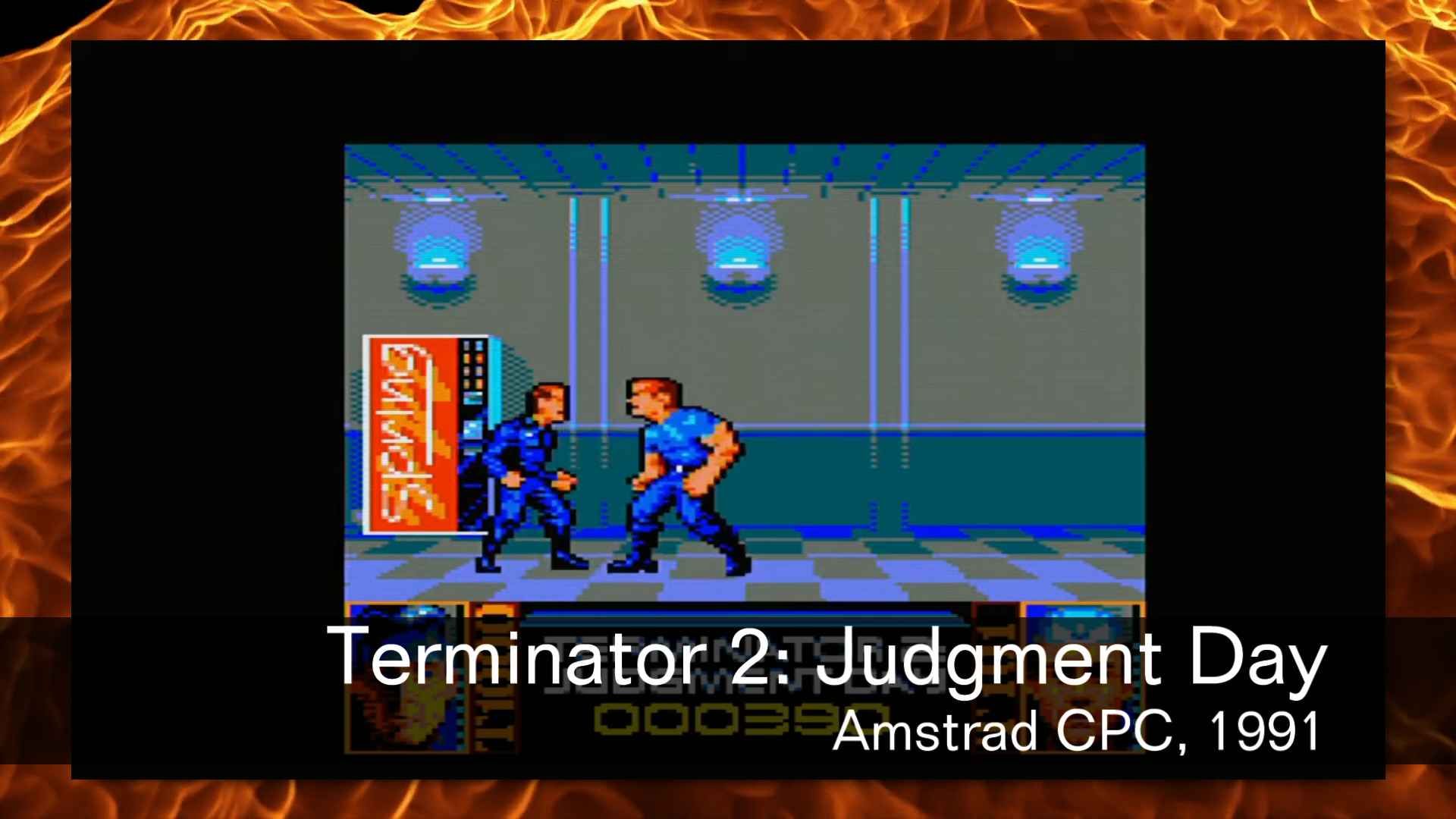
With the other platforms being released two months later, in October ’91, rather than August. They all benefitted from extra visuals, and sometimes even levels, that tied the game better to the film. This isn’t because designers actually had a chance to see the movie, and make alterations, it was too late for that. It was because Ocean were happy to allocate more resource to better selling systems, like the Amiga and ST.
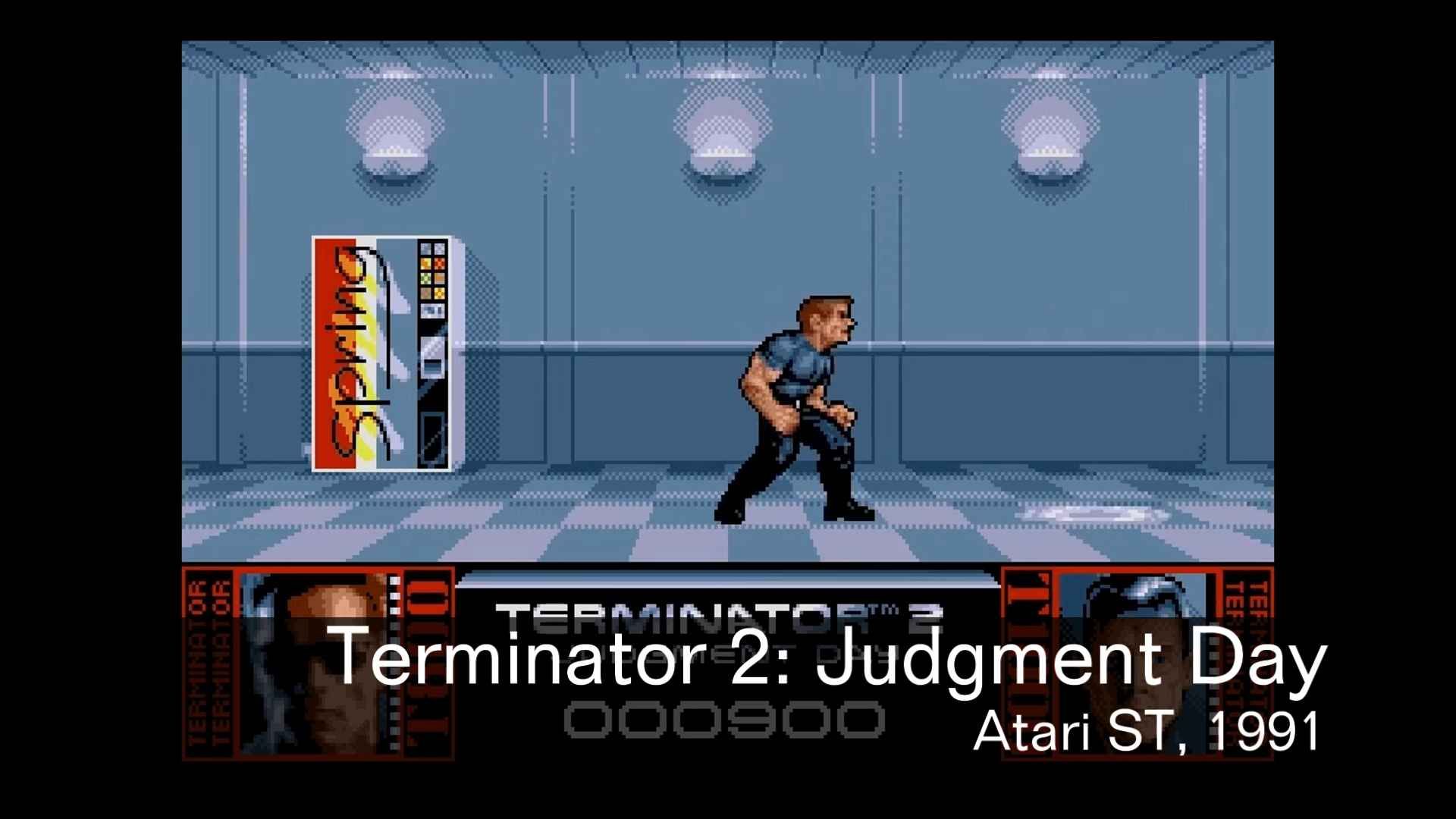
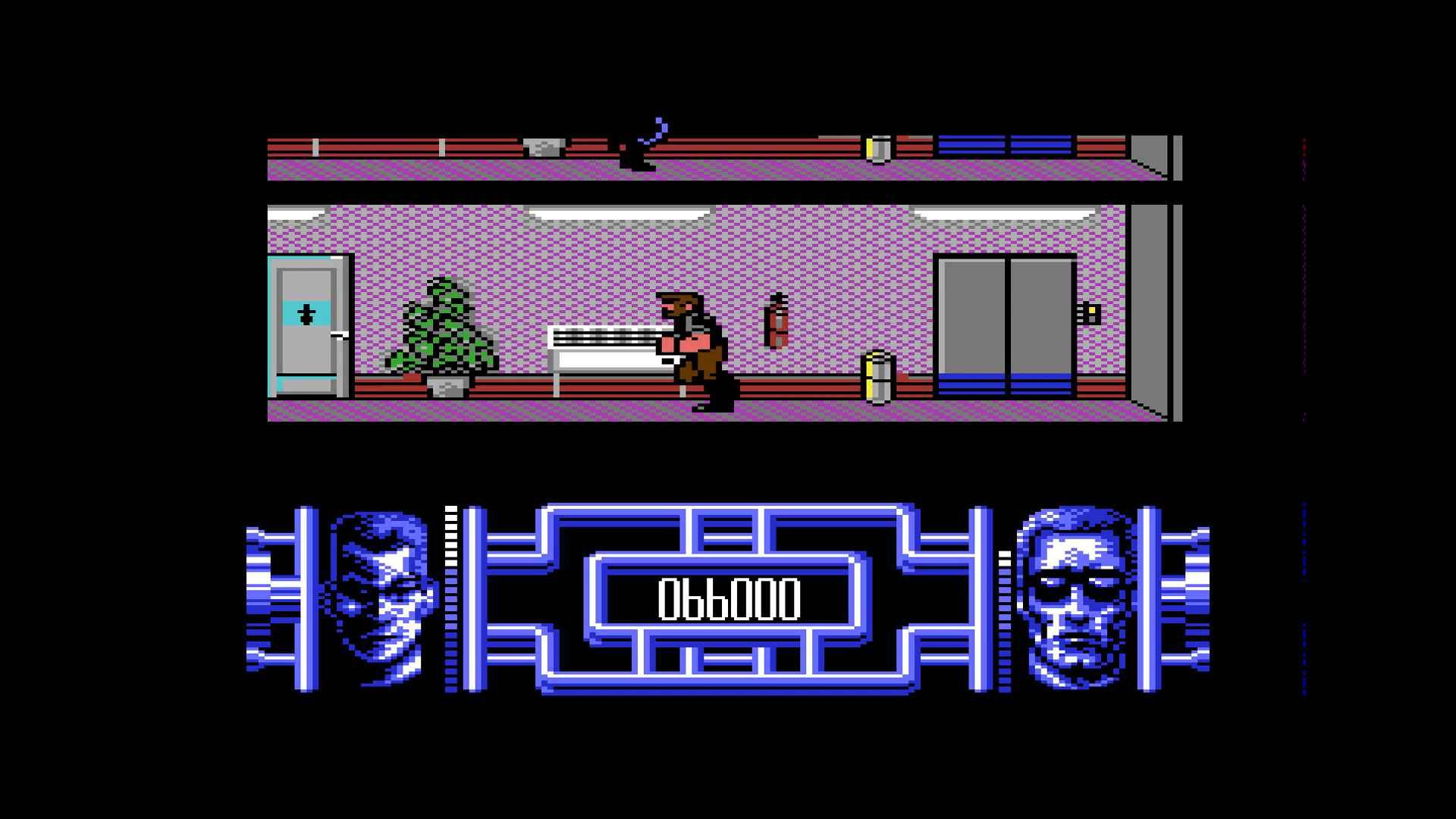
For example, both the Amiga and ST versions, along with the MS-DOS release have a new section outside Cyberdyne, which now has an inexplicable red brick wall running all around it, and Arnie blowing cops away, completely contrary to the film. Even so, these little additions weren’t enough, people expected more from these more powerful platforms, and the game was reviewed less favourably. But interestingly, with the C64 actually undergoing a resurgence in ’91, further enhancements are particularly apparent in this 8 bit version, which has two entirely new platform levels at the hospital and Cyberdyne labs.
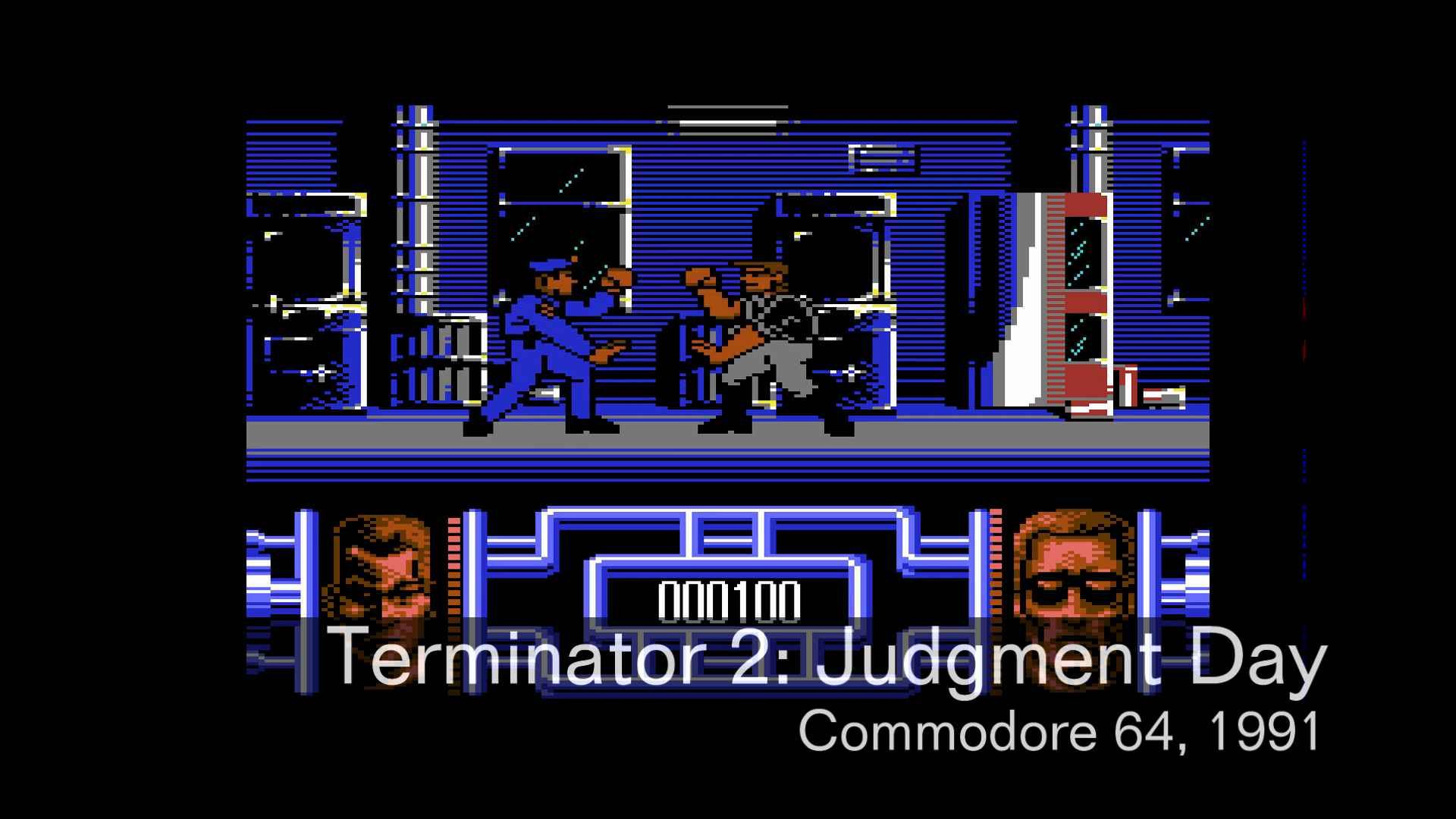
And these levels do make all the difference. Rather than a repetitive button basher, we actually get some compelling gameplay where we get to control Sarah Connor and Arnie respectively.
A deal with Ocean also led to an entire Commodore 64 Retail Pack, computer included, that incorporated the new Terminator 2 game on cartridge, which is absolutely the preferred way to play, as opposed to the cassette multi-load. Yeah, you don’t want that.
This bundle even included a special edition of Commodore Format, recycling the August 1991 cover of the magazine and essentially begging new owners to subscribe to their magazine as soon as possible.
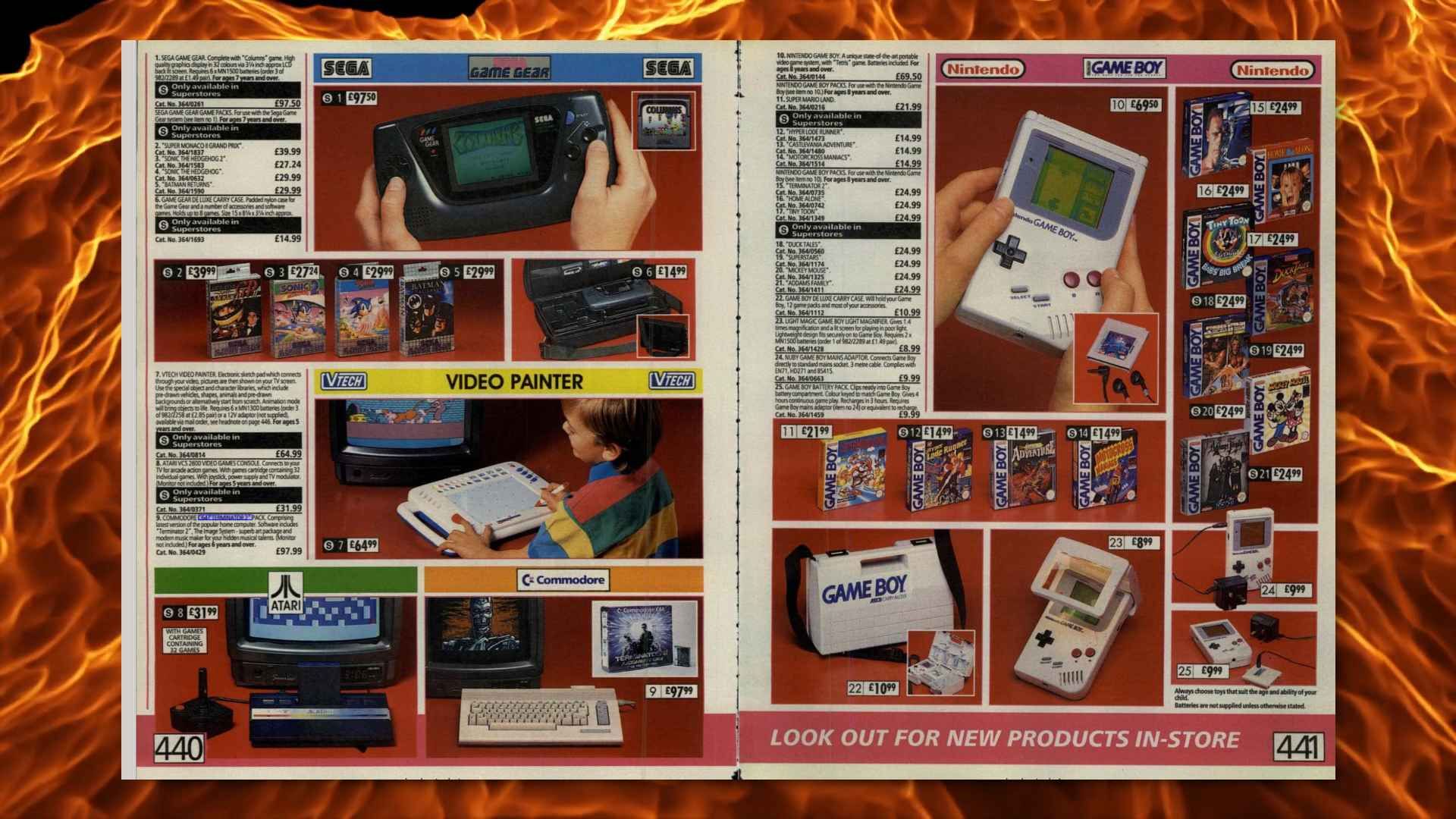
This is then perhaps the most popular of the original Terminator 2 games, and it helped push along an almost decade old computer for at least another couple of years.
It received mixed reviews, even Commodore Format giving it 78%. But Your Commodore gave it a whopping 94%.
The NES Game, Sub-Licensing, and the Likeness Problem
By October ’91, versions of Terminator 2 Judgement Day were now available on ZX Spectrum, Amstrad CPC, Commodore 64, Atari, Amiga and MS-DOS.
But like I mentioned earlier, these versions were exclusive to Europe. If you wanted a version for your Nintendo Entertainment System, well, you’d have to wait until February 1992, for LJN to finish their work.
Despite more powerful systems being out, the NES was still the most popular console in the United States at this time.
Thankfully the box artwork is a little bit different. It’s actually a striking image which at least differentiates it as an entirely different game from these other releases.
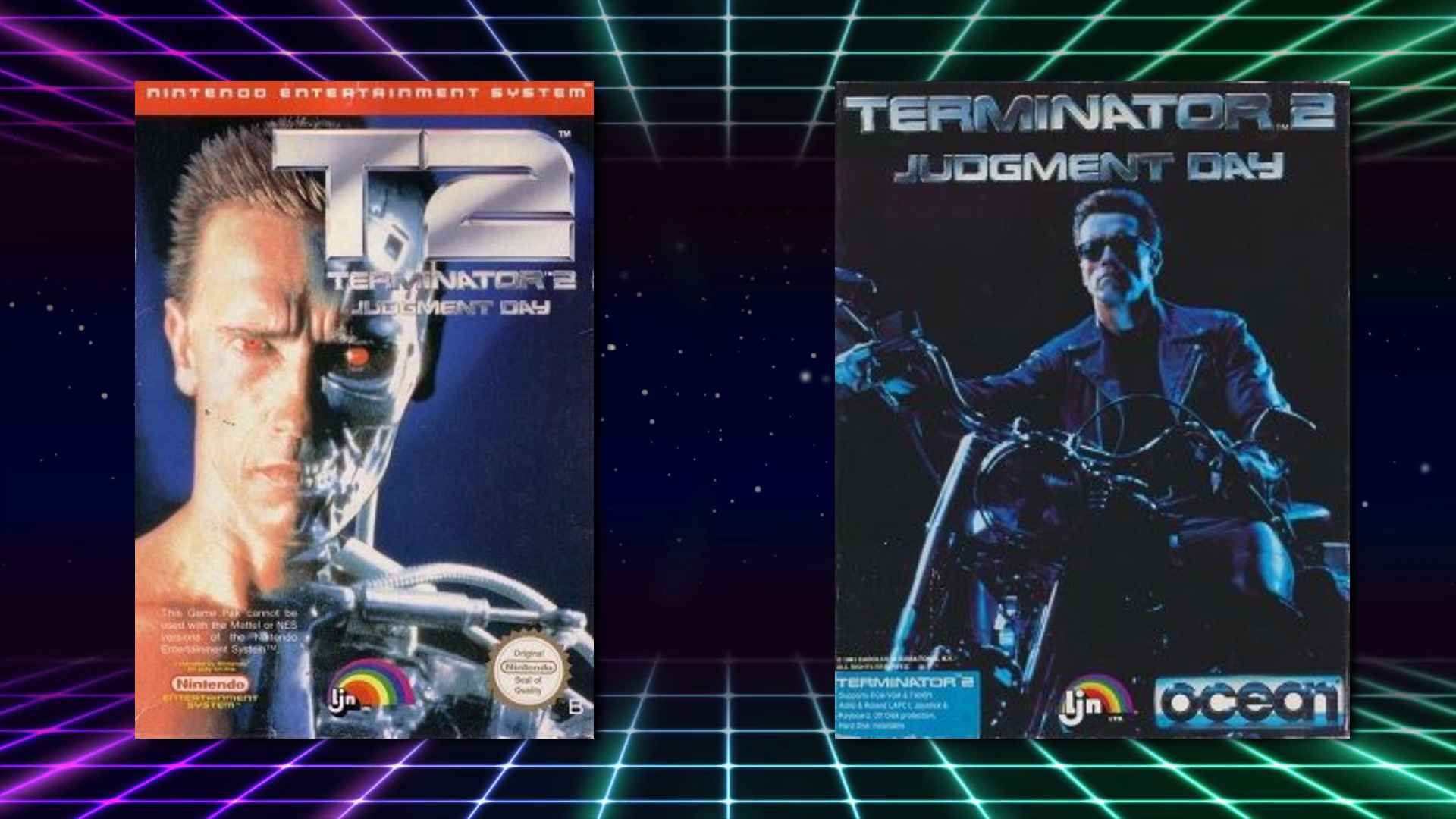
But, yes, it’s sadly LJN who were afforded the main licence, and we’ll touch on their releases shortly, but weirdly, you’ll also find their name strewn through the Dementia and Ocean versions of the game. Why?
Well, remember I said that Ocean bought the licence off them. Well, that was because LJN didn’t want anything to do with the home computer ports, it wasn’t their area of expertise, and not really worth their time, given most of these machines didn’t sell well in North America. Instead they sub-licenced to Ocean, but under the terms that their brand still appeared on packaging and within the game.
Whilst we’re on licencing, neither LJN, nor Ocean had the rights to recreate the actors faces. That’s why when you look at the Arnie sprite in ANY of these games, including the latter Super Nintendo and Mega Drive versions, they look nothing, absolutely NOTHING like him.
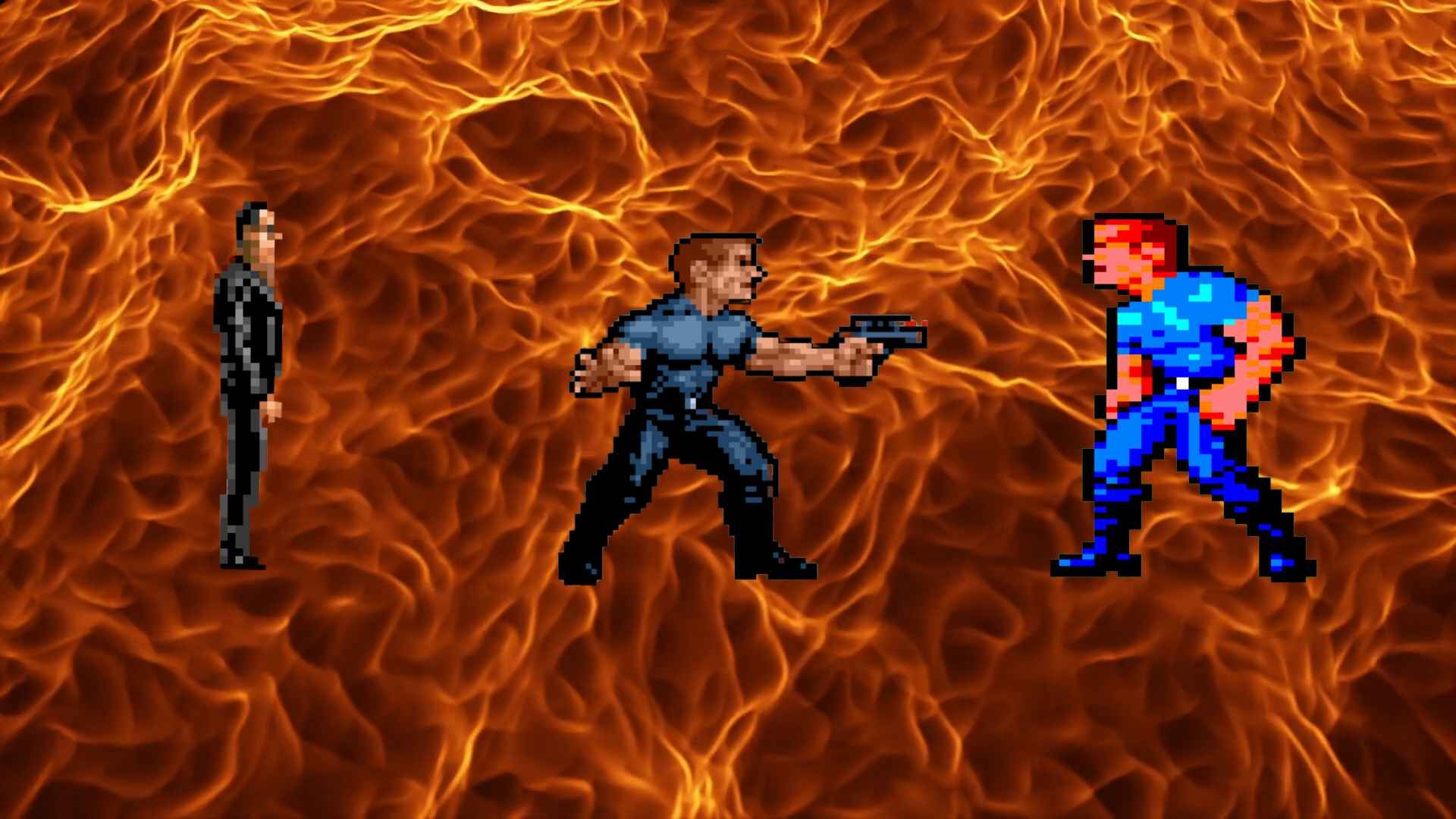
It’s also why, on this Amstrad screenshot (which is on back of some boxes), we get someone who looks like Clarence Boddicker rather than Arnold Schwarzenegger.
I know what you’re going to say….. what about all the digitised images and clips in the games, particularly the 16-bit versions. Well, although Ocean didn’t have the licence to create original graphics based on Arnie’s likeness, their licence did technically allow reproduction of approved stills. So if the machine could handle it, you’d see stills instead. Outside of this, not even the movie studio had rights to actors likenesses.
This LJN NES release, also shows Arnie in digitised form, kinda…. KINDA.
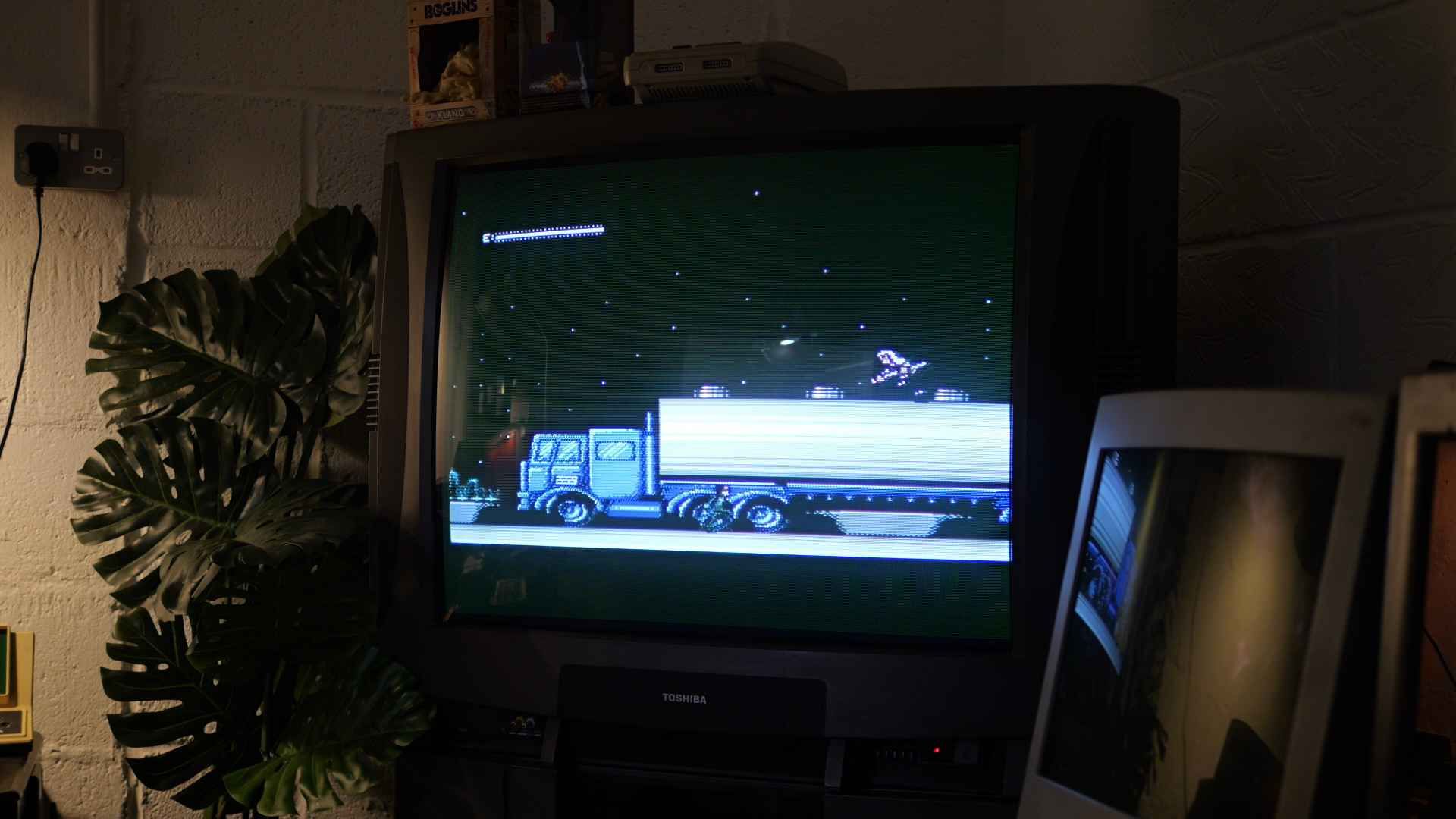
But it was this version that LJN pinned all their hopes and dreams onto, and like most other LJN releases, it wasn’t the best, but it does also try to follow the film, this time with the advantage of development after the film’s actual release. Yes, the developers LJN chose for this title, Software Creations – another UK based developer, who would go on to become Acclaim Studios Manchester – at least got to see what was happening on the big screen.
We’re treated to five distinct levels. The first at the truck stop, where despite already wearing clothes, our Arnie like dude punches the crap out of as many people as possible, to get to the bar and then fight a colossal biker. Yeah, it’s a loose pairing with the film.
The second is an isometric chase which also involves the flood channel, and avoiding debris, whilst shooting the truck. Pretty similar in theme at least, to the home computer release.
Then we’re in the hospital, but instead of playing Sarah Connor like the C64 game, we’re searching for Sarah Connor, in fact, we play as the T800 throughout this title.
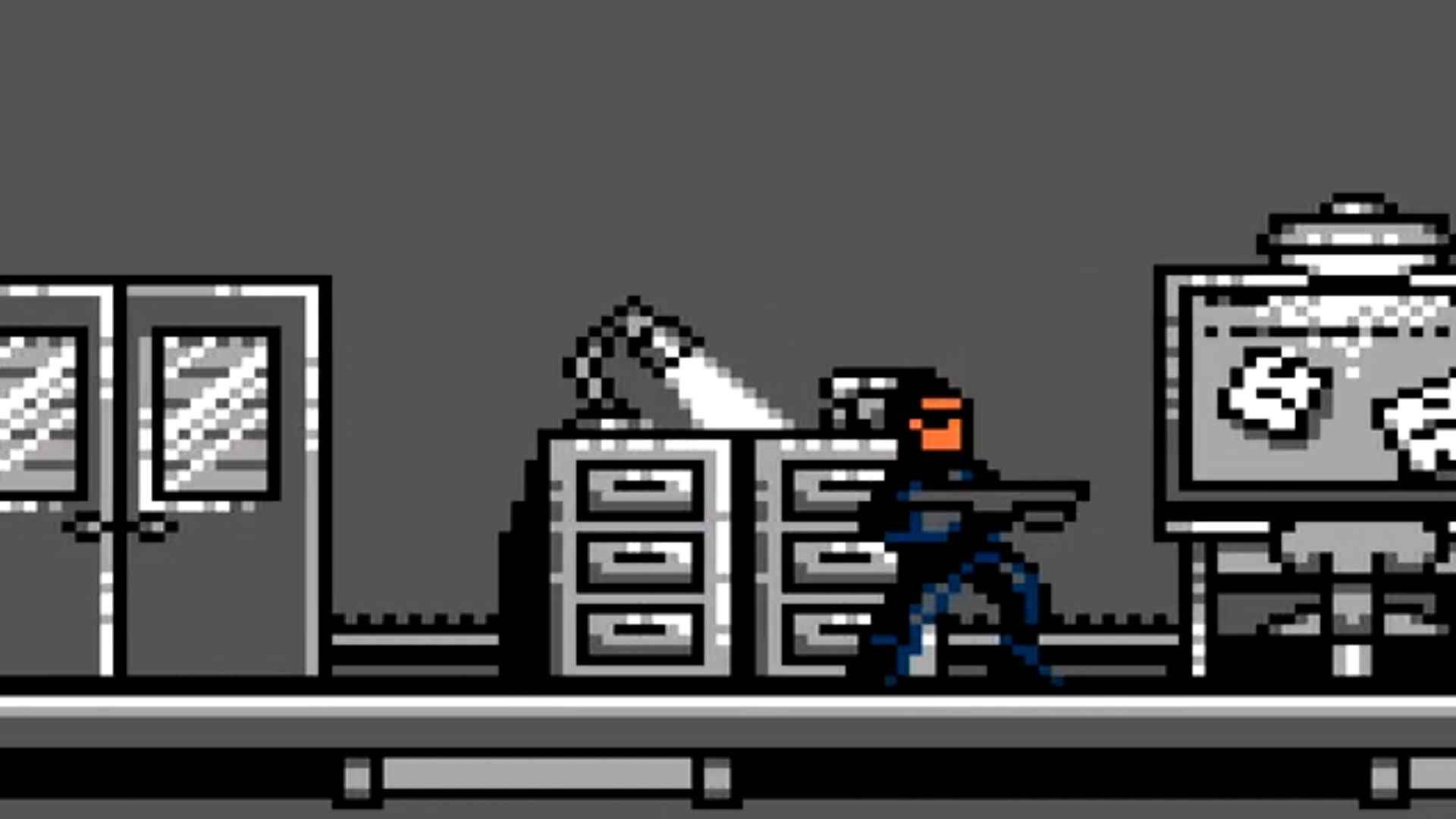
Who just like the movie, swears he won’t kill anyone, before firing fist sized projectiles directly at their di*ck.
Next up, we’re in Cyberdyne Systems to blow it up and we finish in the Steel Mill.
It’s basically a platformer, with a driving component thrown in. But I find it hard to imagine Arnie jumping around like this. Da Fuq is dis? T-800 Ballerina Edition?
The Sega Game Gear would get a version developed by Arc Developments and published by Flying Edge almost two years later in December 1993. This was also essentially the same version released in Europe for the Sega Master System in November 1993.
Now, you won’t see LJN branding on these ones, mainly because Flying Edge was a division of Acclaim Entertainment founded specifically to publish titles on Sega consoles, and at the time, well, LJN was also owned by Acclaim. Arc Developments were another British developed formed by ex-Elite Systems employees who tended to white label their products for the publisher.
This game was based on the NES release but omitting the biking level, and with a few tweaks to the gameplay and visuals here. Generally it was received less well than the NES version by critics, and felt like a hastily put together conversion, lacking the story elements of the NES title, and features such as the ability to select your weapon at the start of levels.
Just like the home computer ports, LJN weren’t really interested in the Sega releases. But Nintendo being their home ground, they were interested in the Game Boy, which was actually their first release, in November 1991.
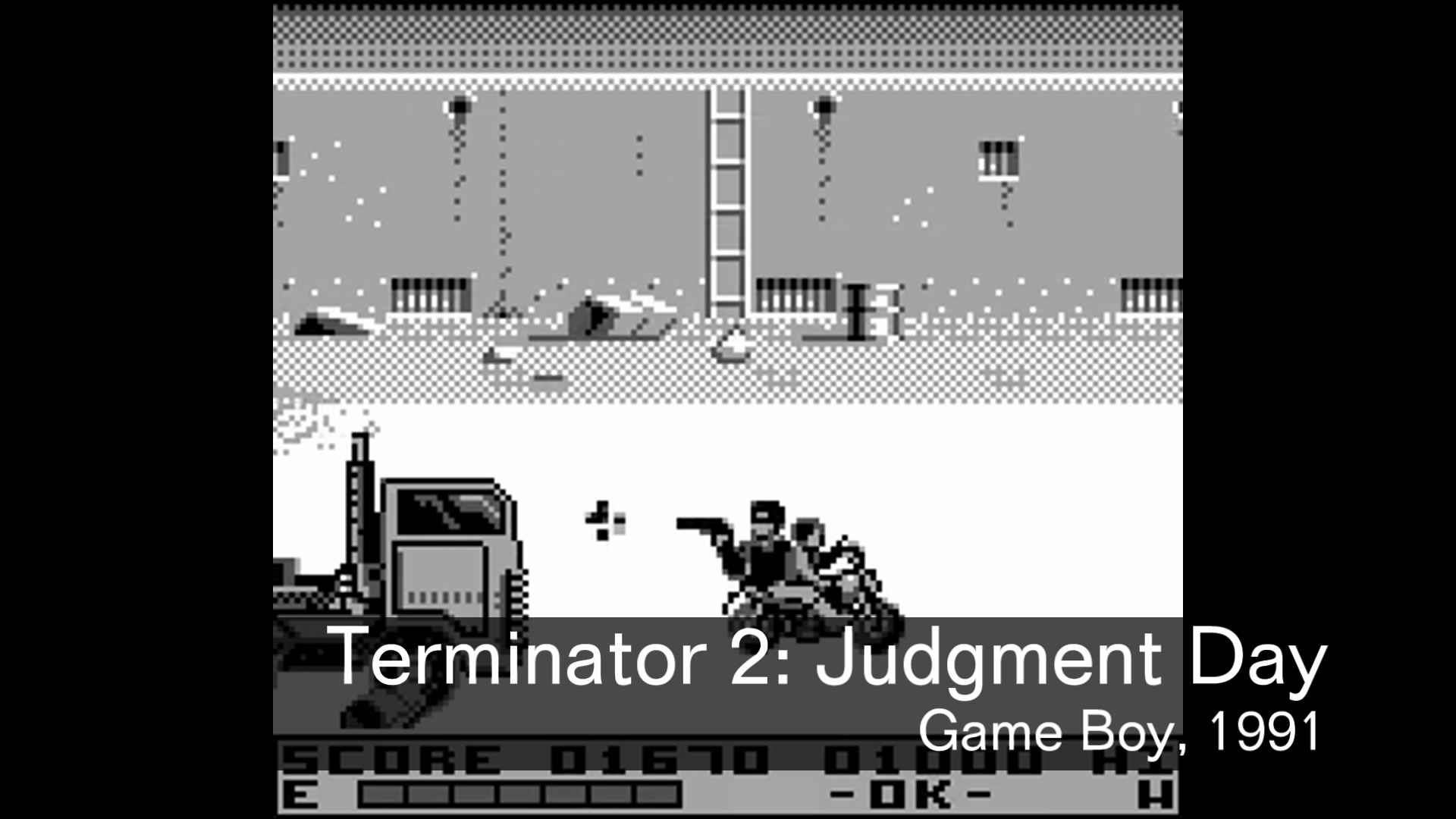
The Game Boy version was tasked to Bits Studios, another UK developer, operating out of London, who had already created various titles for the handheld including Chase H.Q. and Robin Hood: Prince of Thieves, and this is actually a fairly decent game, with Mean Machines Magazine considering it one of the best Game Boy games to date, and GamePro writing “it takes the best bits from the movie [and] cuts out all the boring bits where things weren’t getting blown up”.
But it actually veers away from the movie as well. LJN didn’t want it to be a copy and paste of the NES version, as they thought that kids who owned an NES would be the ones who also owned a Game Boy, and would therefore want a different game. I’m not sure where they thought these kids were getting all their money, but it paid off.
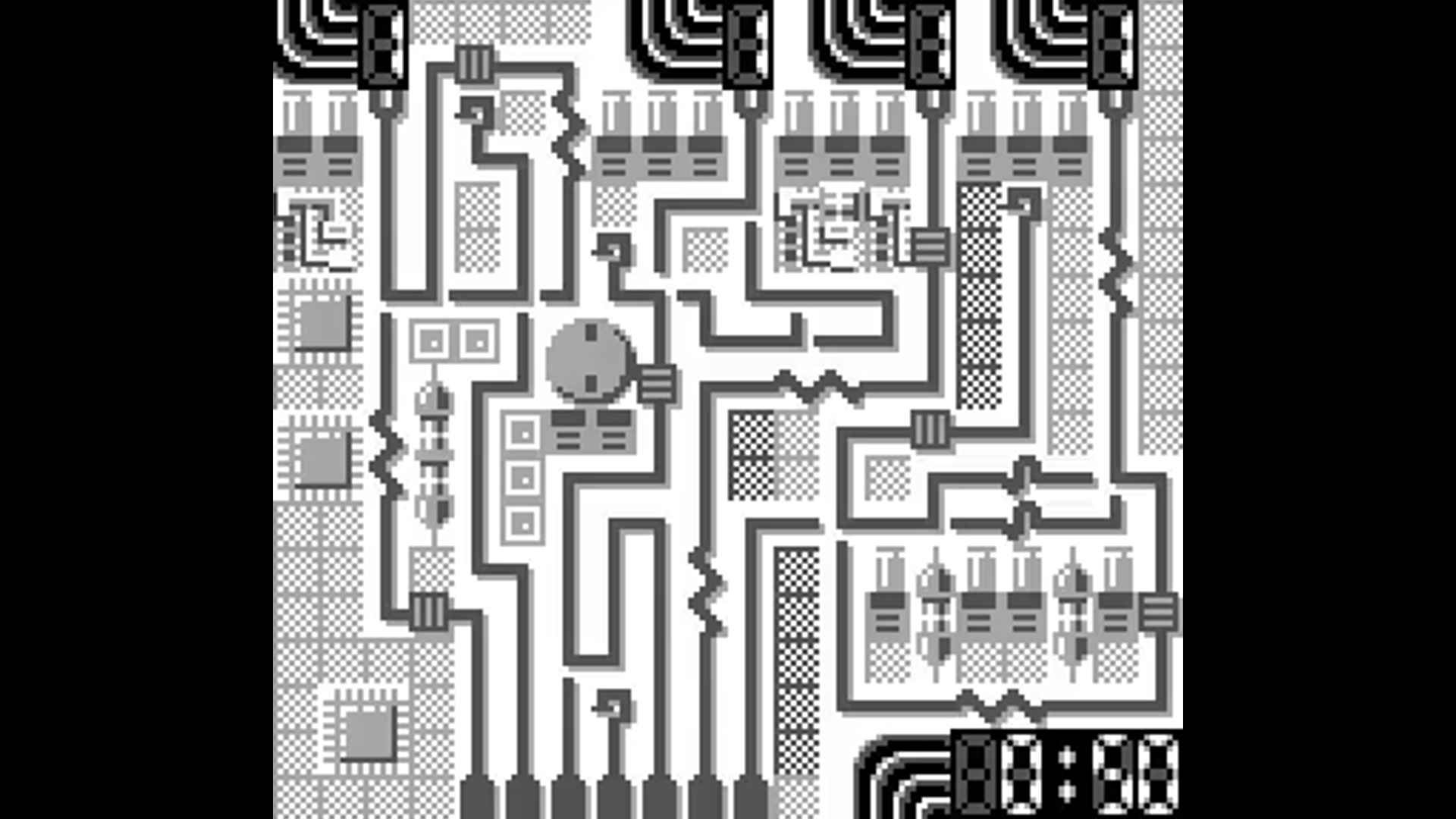
This time we get six levels, but in the first two we’re controlling John Connor, travelling through Skynet forces in order to send Arnie back to 1995. Weirdly a bit like Bulmer’s original concept put to Ocean.
The third level, like the home computer versions is a puzzle, but this one actually makes sense, as we’re reprogramming a T-800 by arranging the circuity in the back of its head. Pretty neat.
The fourth level is our familiar flood channel chase. Seems like this idea was almost universal among the designers. Followed by more platforming at Cyberdyne systems, and finally the steel mill, where you either shoot or punch the T-1000 to its death.
Just like the NES game, we get storyline, but it’s narrated by Sarah Connor. Which again, is a nice touch.
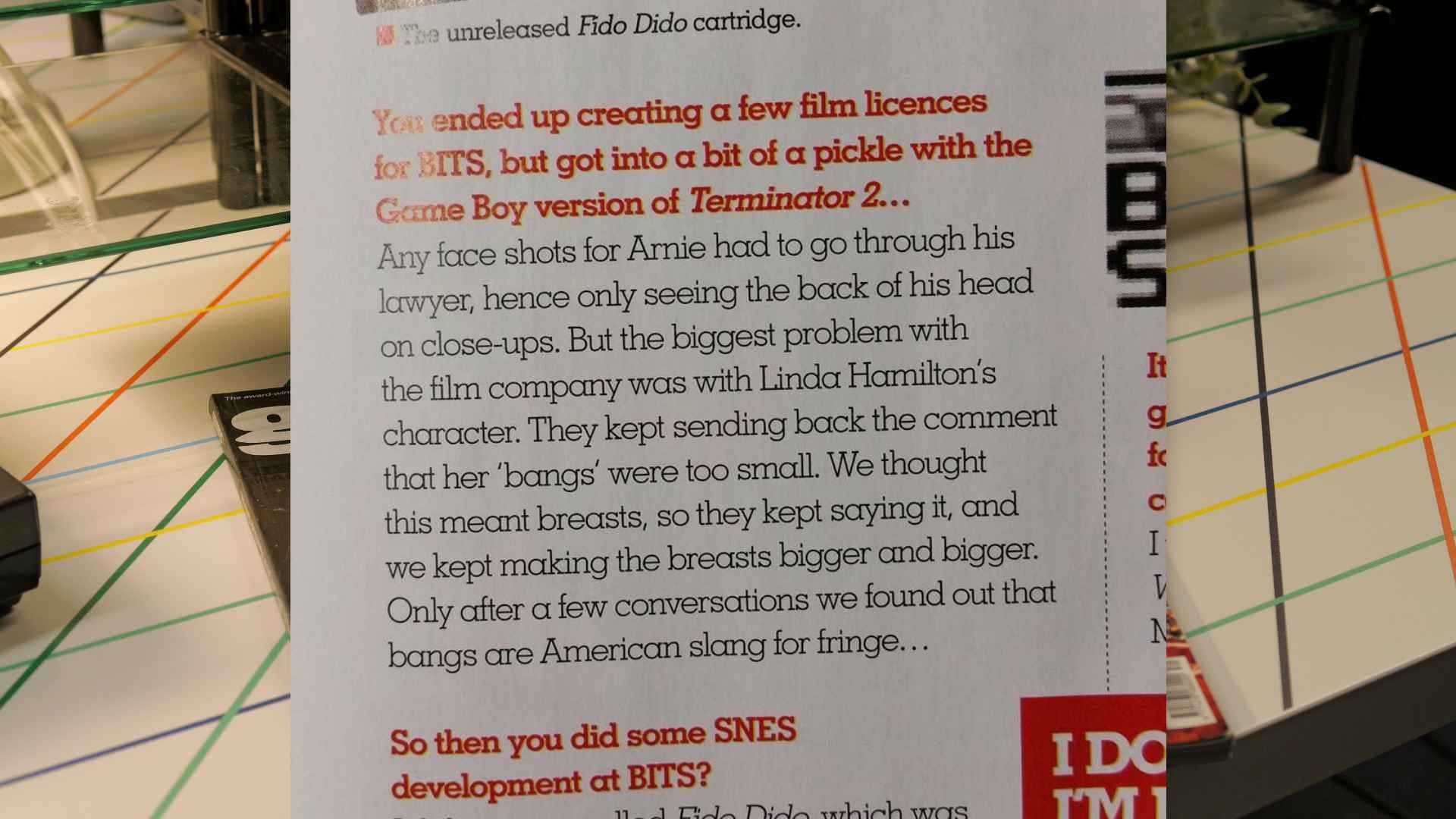
And again like the NES game, the developers here had much more knowledge of the film. In fact, they had direct communication with the production company Carolco, which led to an anecdote from gamesTM magazine where the American company were feeding back that Sarah Connor’s “bangs needed to be bigger”. In the UK, especially then, we didn’t know that “bangs” meant hair, and so Bits Studios thought they were talking about something else… ahem… thankfully things got cleared up before publication.
But it’s a familiar tale.
Back then European home computer games were crying out for communication, for funding, for time whilst the big American companies with a vested interest in Nintendo releases were getting all the help they needed.
I dunno, maybe we were too busy drinking tea over here, rather than picking up the phone.
The 16-Bit Console Versions (Two Years Late)
Which leads us on to the 16-bit home console versions. Arguably the releases which should have been the prize format. The all encompassing narratives’ that offered an interactive experience akin to the joys we beheld in theatres during July and August 1991.
Well, firstly, both the 16-Bit console games were late to the party. For the Super Nintendo, we’re talking September 1993, and for the Genesis/Mega Drive we’re talking December 1993. Over two years after the movie came out!
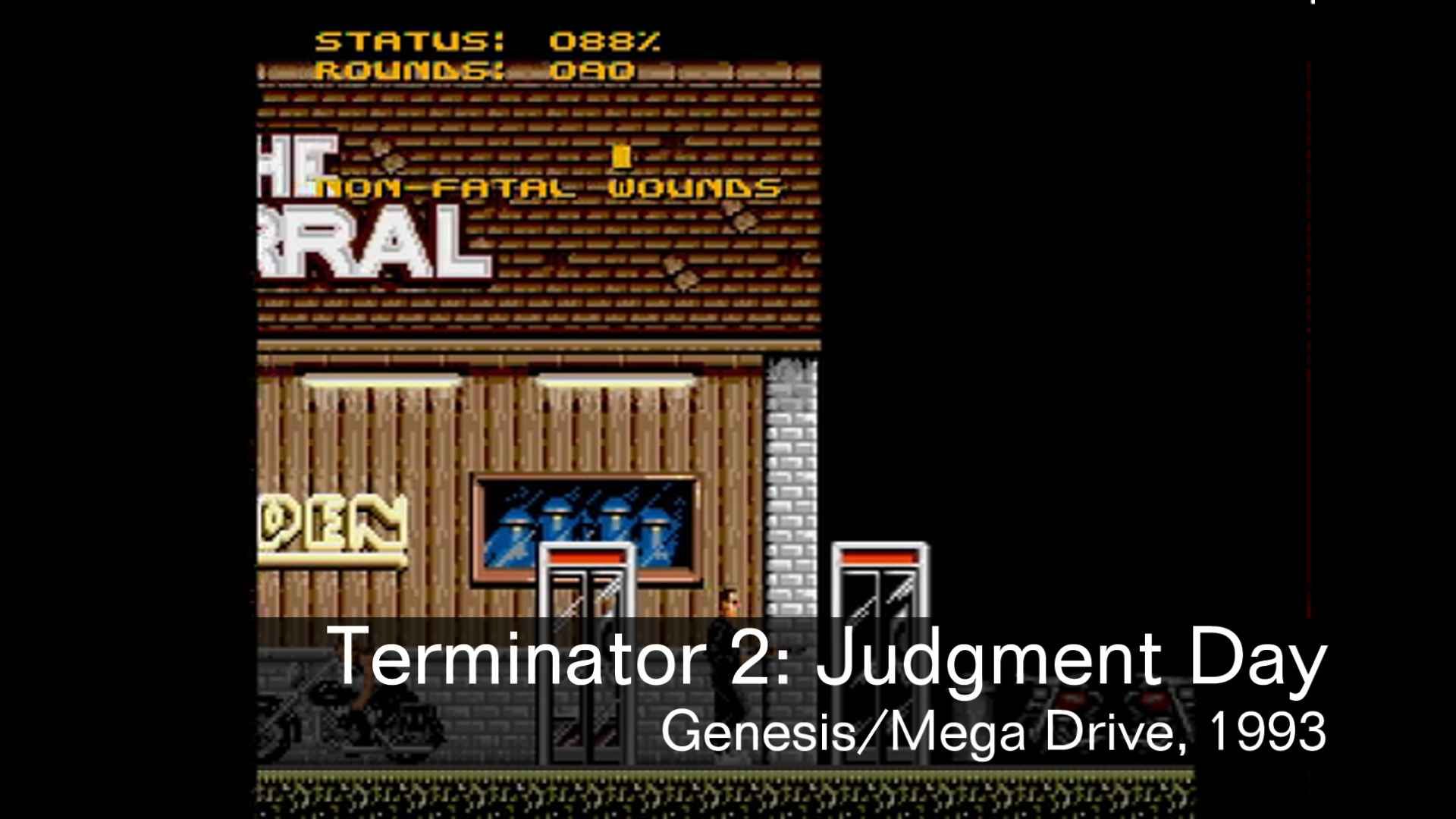
Not that it mattered as much back then. Movie madness for blockbuster releases lasted years, rather than the few weeks it lasts nowdays.
But what would matter was the gameplay.
LJN would handle publishing for the Super Nintendo, whilst their sibling Flying Edge for Sega releases. Development for both games was handled by Bits Studios, after their success with the Game Boy.
But this was not good.
Both versions scored an average of 35% across publications of the time. With the odd magazine awarding weirdly high ratings, presumably, having never actually played the game, but relying on screenshots to get a score out the door before everyone else.
Apparently John Connor can take multiple point blank shots to the head, no wonder he’s the leader of the resistance, and I don’t know what it is about this rendition of non-Arnie, but he just looks funny as heck. I think holding his gun like a set square doesn’t help. If you can deal with that, then you guide him through eight locations.
The truck stop, with some nicely placed scenery. I’ll admit this is well done.
John Connor’s house, weirdly.
The Mall, the hospital, the weapons cache, Miles Dyson’s House, Cyberdyne Systems and finally the steel mill, where further T800s are here to try and destroy you.
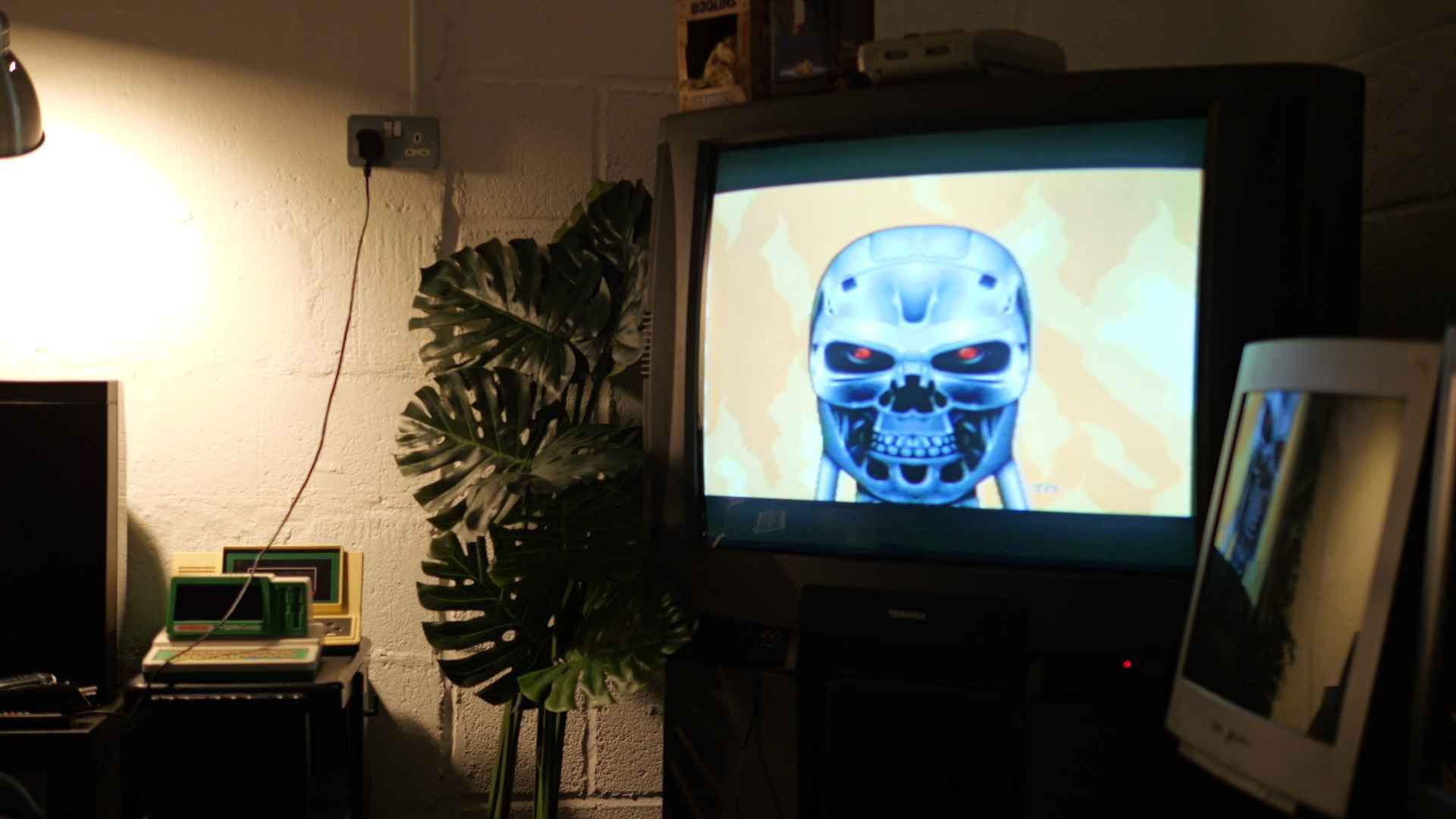
It just doesn’t make sense, and it shows the lack of imagination in trying to create a level that’s challenging. It’s also got the same damn tune playing throughout the entire game, which would be fine, if it were good, but it sounds like the interlude music you’d find in 90s TV show Art Attack.
Throughout the game you get various objectives in the style the T800’s HUD, including leading John to safety and collecting items from the future.
There are also biking sections in-between the levels, which are designed to tie things together, but really just detract from the action.
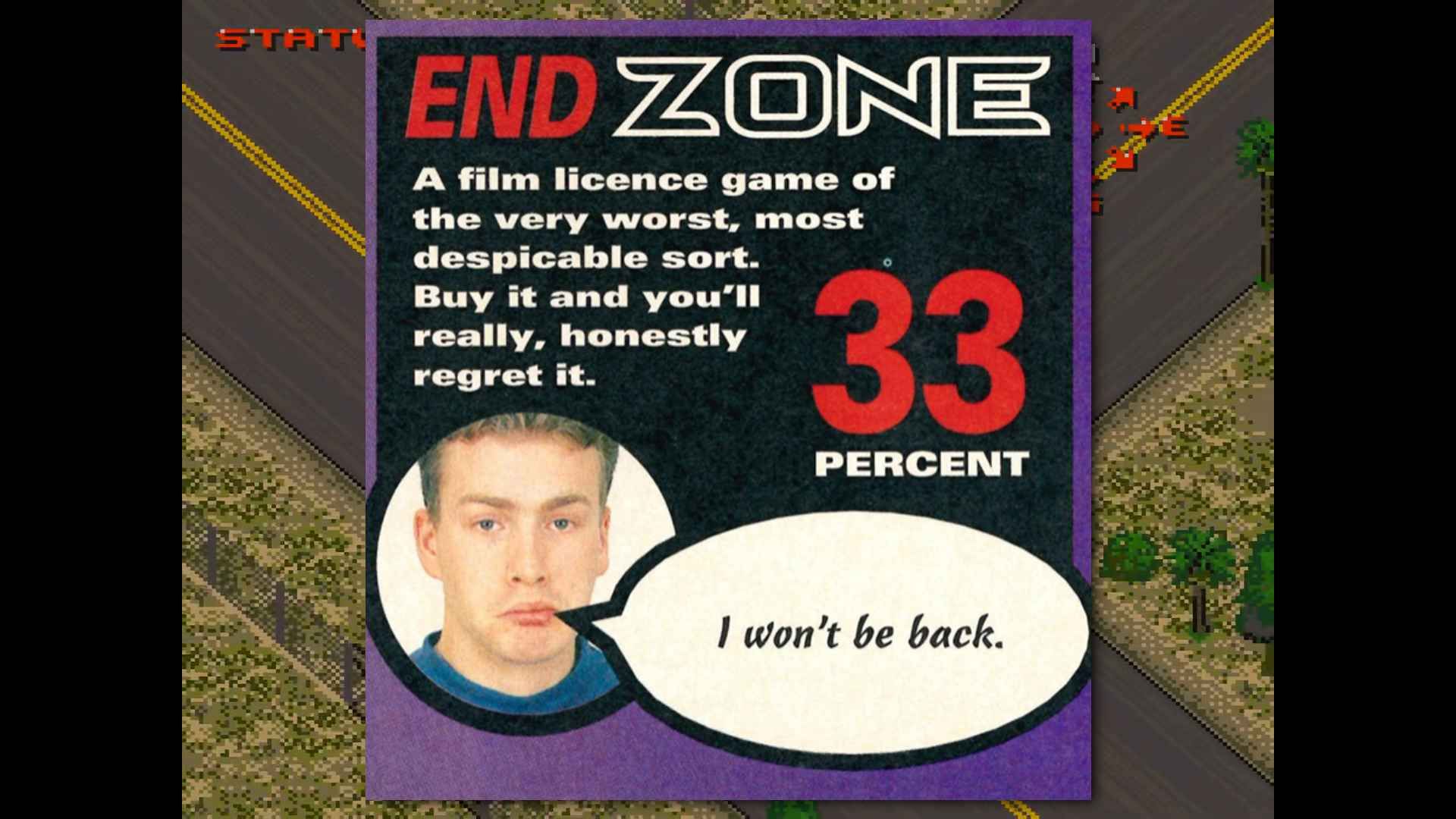
Sega Zone commented that the Mega Drive version was a “film licence game of the very worst, most despicable sort”, which is going a bit far, but it’s really very poor, especially given how much more time they had over the prior versions. But, we’re still only talking a couple of years.
and that’s really why I wanted to talk about these games. The development of the home computer versions was extreme, I needed to highlight it, but this wasn’t that different from the norm back then. The console versions had more insight and more time, but Acclaim still wasn’t really fussed about the output, as long as they completed the brief.
Steve Howard was one of the developers for the 16-bit versions, and in an interview by Dreamkatcha, dug up from Archive.org he states “we actually put quite a bit of effort into T2, and some of the coding I did for it really stretched the hardware (although you wouldn’t notice)”. But he goes on to say that “Although quite a lot of time was spent on T2, it was rushed towards the end, and the part of the game that gets the most criticism, the driving section, was never properly finished… we ran out of time when it came to making it playable”

Interestingly he also mentions that because of the way it had been written, they actually managed to convert the SNES version to the Mega Drive in about a day, which is honestly, mind blowing.
The 2 year development window for a 16 bit title wasn’t really that significant, especially when you consider that Bits had other projects on the go. Plus, this was a time when lots of Terminator Games were coming out. Midway’s arcade ports had already arrived in 1992. They already had the arcade exclusive licence, and were able to create home console ports by licencing the arcade game versions as a product. Then Mindscape’s Terminator games based on the first film arrived somewhat late, after that.
So Bits and Acclaim had their work cut out to squeeze this in somewhere, but with the VHS rental versions of T2 now doing the rounds, there was a rush to get T2: Judgement Day out before Christmas 1993 and capitalise on this never ending Terminator fever. Without that rush, we would have received a better game, but arguably, it would have had less commercial success.
It’s difficult to tell, but the Bits 16 bit games certainly didn’t shatter any records in terms of sales.
No Fate, and Why It Finally Works
So then, we fast forward some 33 years and we get Terminator 2D: No Fate, and really start to understand why Reef and Bitmap Bureau felt that we were owned a game that actually paired well with such a fantastic film.
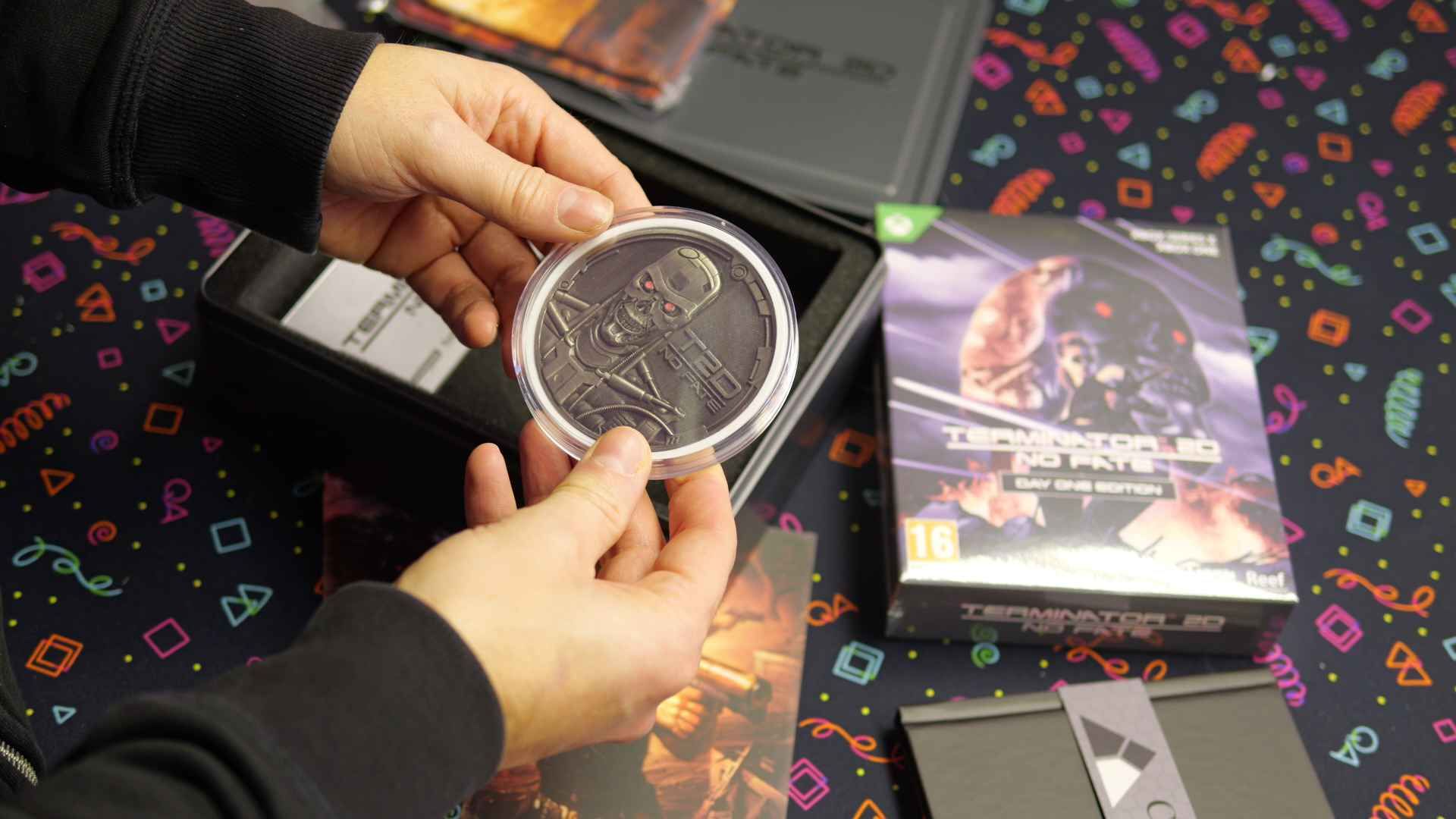
But it’s also clear that all of these earlier titles provided inspiration for this new release.
There are gameplay mechanics, visual choices, story telling elements, and even additional story elements outside of the film that are all borrowed in No Fate, to make a game that selectively picks all the best bits, without filling it in with dross.
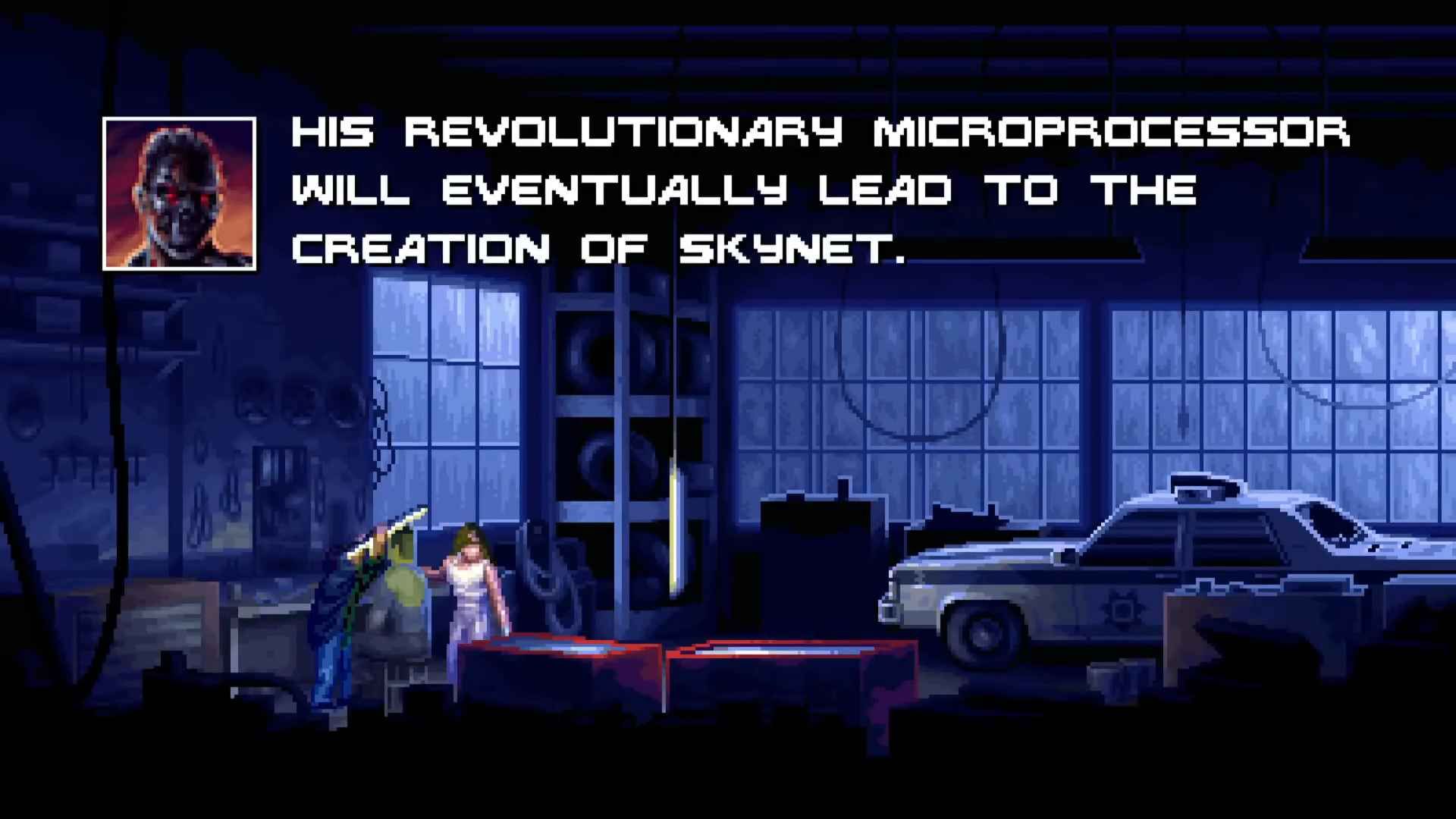
All you need to do is compare a few scenes and it becomes obvious.
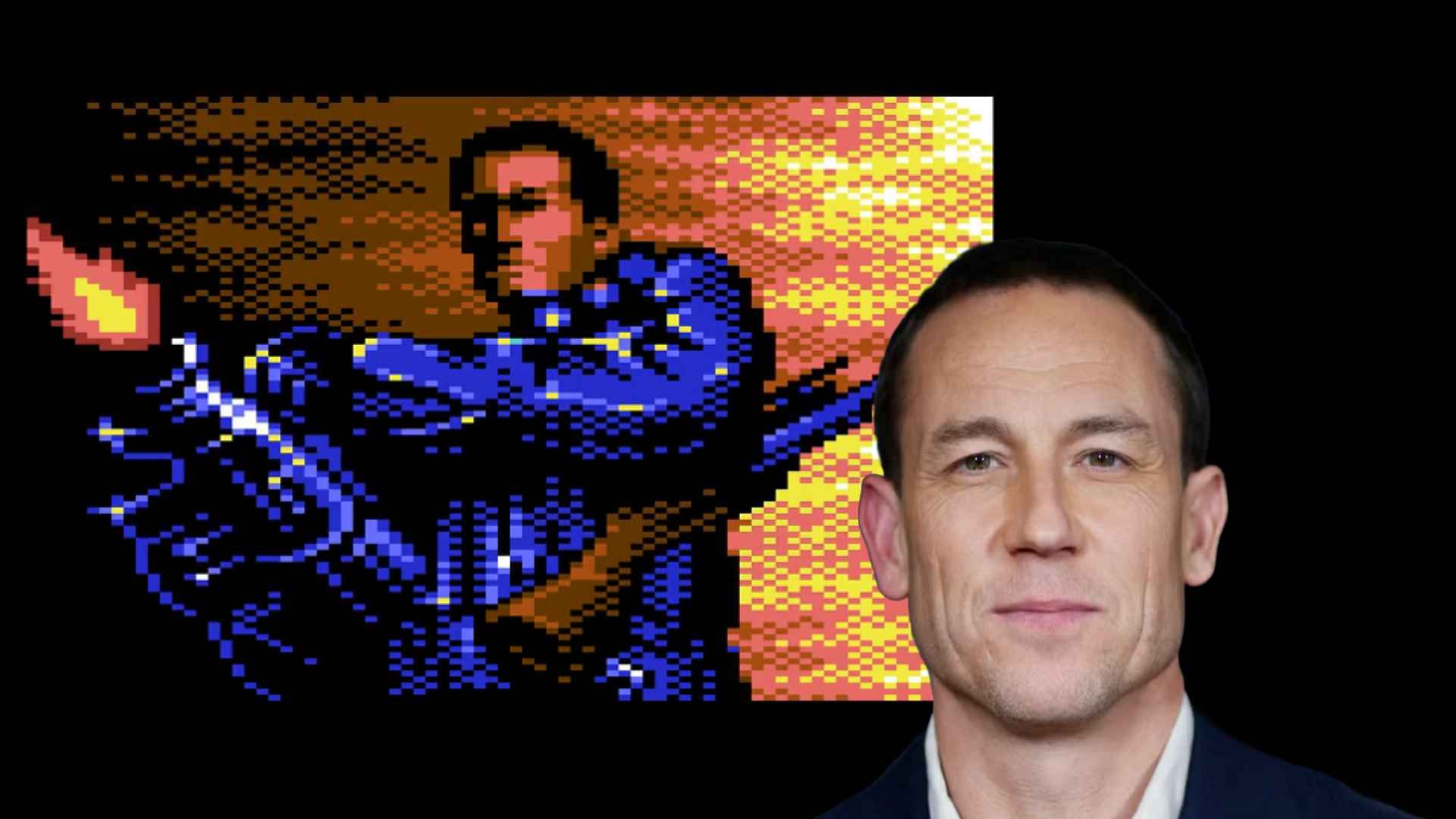
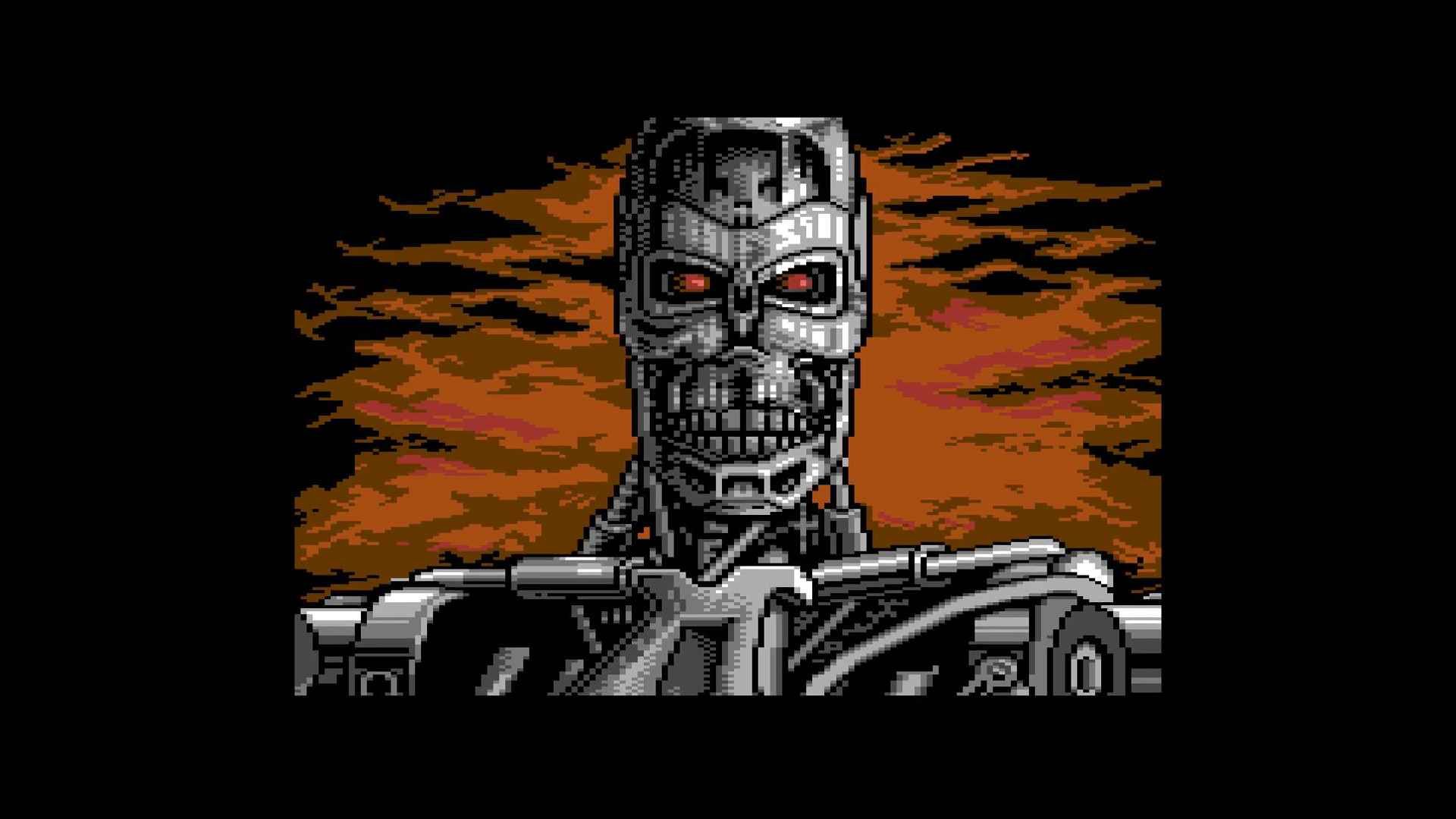
But even with the advantage of hindsight and time, they still faced some of the same challenges. Most of the artwork in No Fate is fantastic, but just like the earlier games, they did struggle with that licencing issue, that’s why Arnie is depicted mostly as a faceless T800. Whereas in the Commodore 64 version they just made him look like Tobias Menzies.
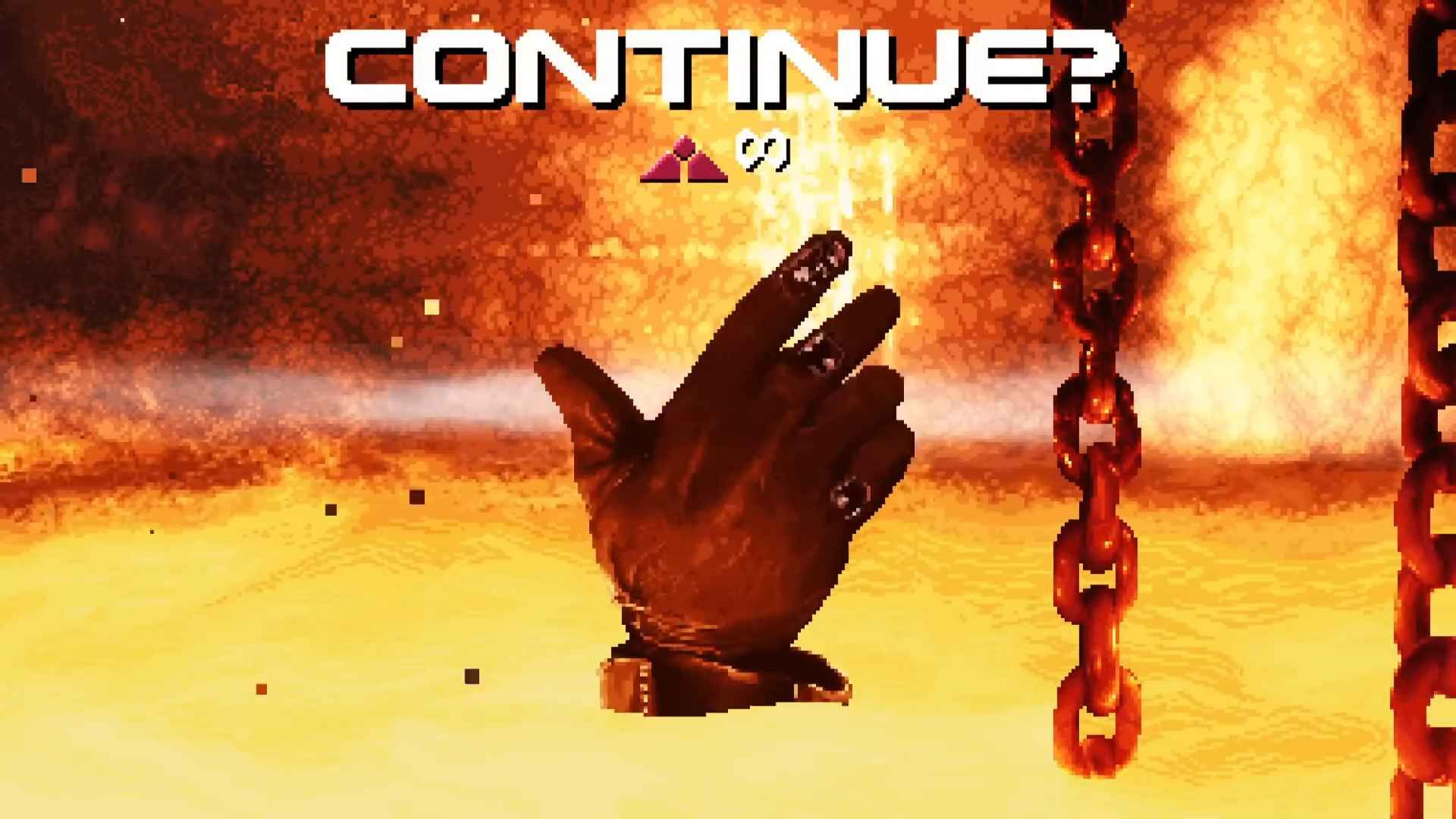
But whilst iconic scenes in the earlier games were funny and disjointed, I mean, this thumb up slapped in the end sequence is just like “Alright mate, cya”, No Fate uses it has a Credits Continue screen, where it makes sense and actually looks good, and sure, part of that is down to better hardware, more pixels, better graphics and much better development and design tools. But there’s more to it than that.
After grabbing some burritos, I spoke to my friend Quang who worked on the game, to get his perspective regarding the old titles and what Bitmap Bureau have done;

“Hey, I’m Quang, and I was a gameplay designer on the game Terminator 2D: No Fate. Terminator 2D: No Fate is a run-and-gun arcade style game. We’ve taken lots of references from all the arcade games from the ’90s; things like Shinobi, Contra, Metal Slug, and Rolling Thunder; things like that. We did take a look at the other Terminator games for references. If you see some of the bosses; the factory boss is a reference to the one in the arcade. The Saturnian boss is from the artwork on the side of the pinball machine. There are little nods to in our previous games. Growing up, we played a lot of Terminator games because we were big fans of the movies, but none of them were actually any good. Maybe the arcade was okay, but we needed better. Being able to make a new one and do it justice; that’s what we wanted to do. It’s one of those things where you had to get the right people in the right place that wanted to make the game. We weren’t doing it to cash in on the licence; we’re doing it because of the love of the movies. The visual developers were under a lot of pressure to do it; so given their constraints, they probably did the best they could.”
“We’ve definitely made a better game for having all the reference material that we could get hold of; watching all the movies multiple times. This has all helped. It’s a game from our childhood that didn’t exist. Being able to make it real is a childhood dream come true. Such a cheese.”
Bitmap Bureau definitely benefit from passion and a nostalgia love for the film. It’s something that would have been hard to replicate before the film had even come out.
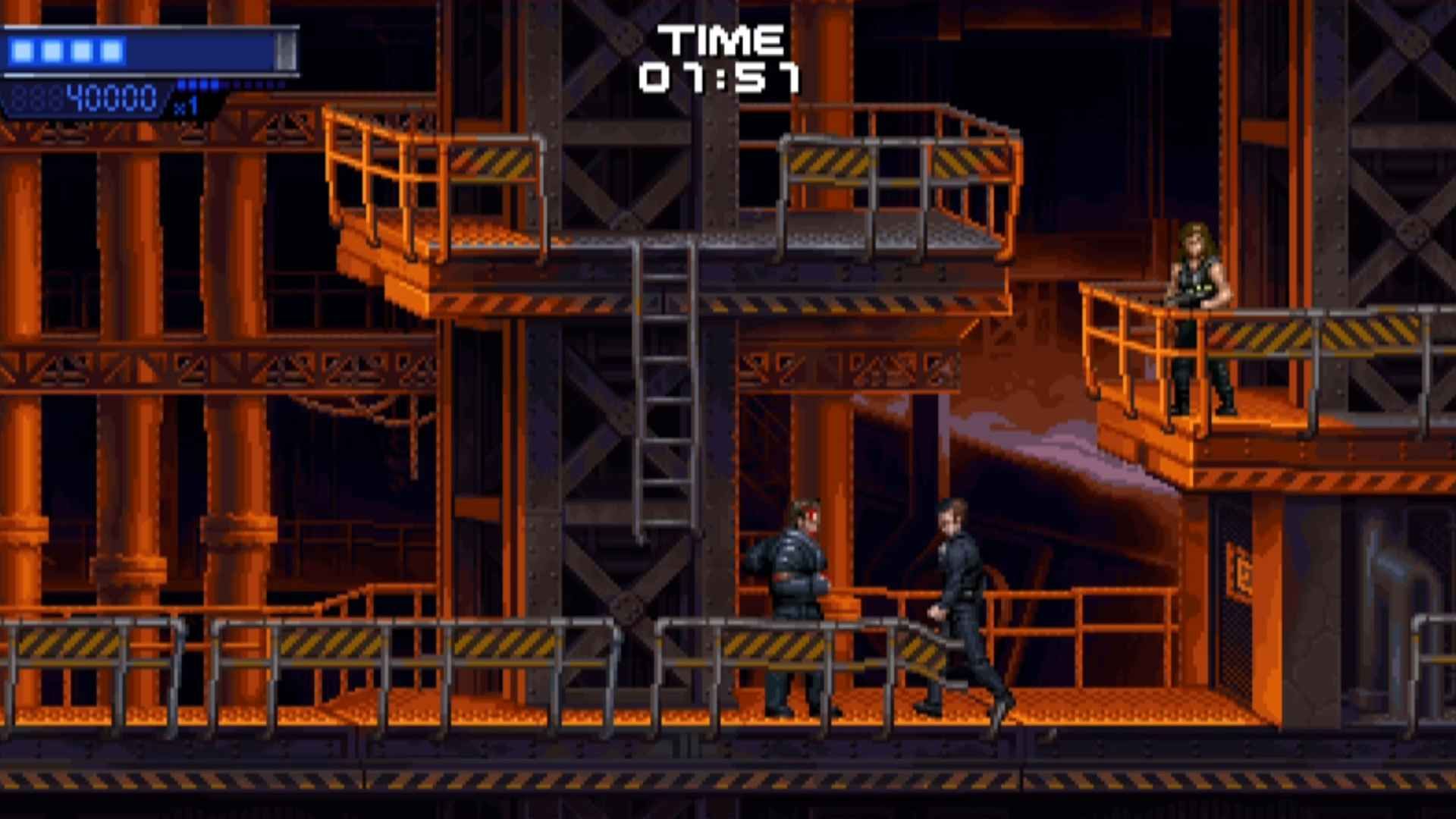
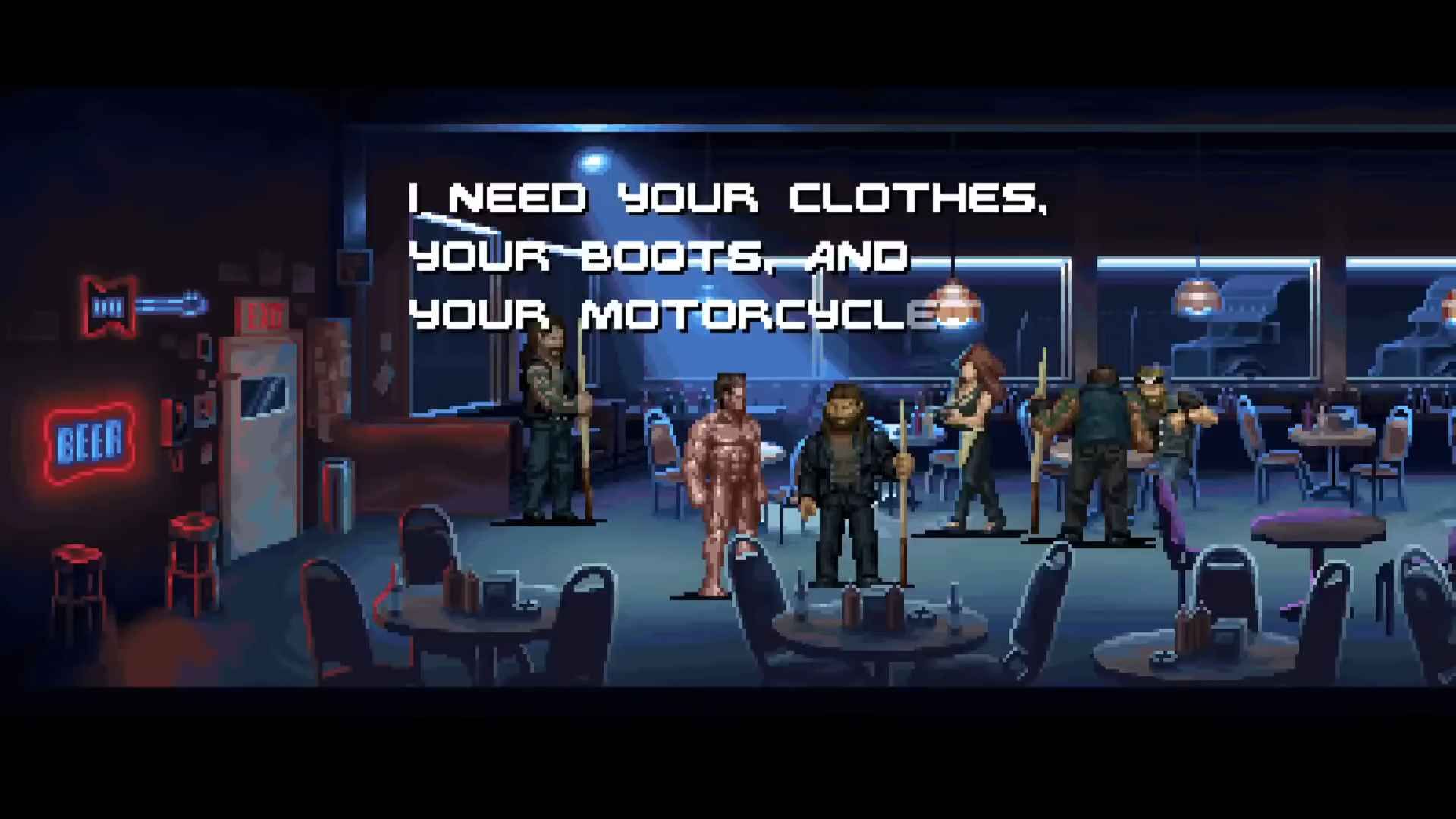
That passion is evident in the details and easter eggs throughout. For example, on the first level, we’re treated to a secret Alamo gun shop, that’s the shop from the first movie. We’ve got the ability to beep John Connor’s horn before Arnie catches up on the chase scene. In the steel mill we can witness the ongoing fight between the Terminators happening below, not to mention the hidden morse code…. and Quang even gets some voice acting in after the mini-gun Cyberdyne scene.
OH… MY CAR….. Which is of course a reference to…. Street Fighter 2.
Nice.
But it’s more than that, what Bitmap Bureau did differently is not just “make it better”. They made choices.
They took the sequential storytelling ambition of the Ocean microcomputer games. They took the confidence and punch of the arcade title. They took the visual density and scale people wanted from the 16-bit console versions. And then they discarded the chaos.
Like Quang said, they also borrowed from other games that did the run & gun formula better and crucially they also borrowed from other games that did the Terminator formula better, such as Probotector and importantly; RoboCop vs Terminator; A title released around the same time as the console releases, but crafted with more passion and care for the source material.
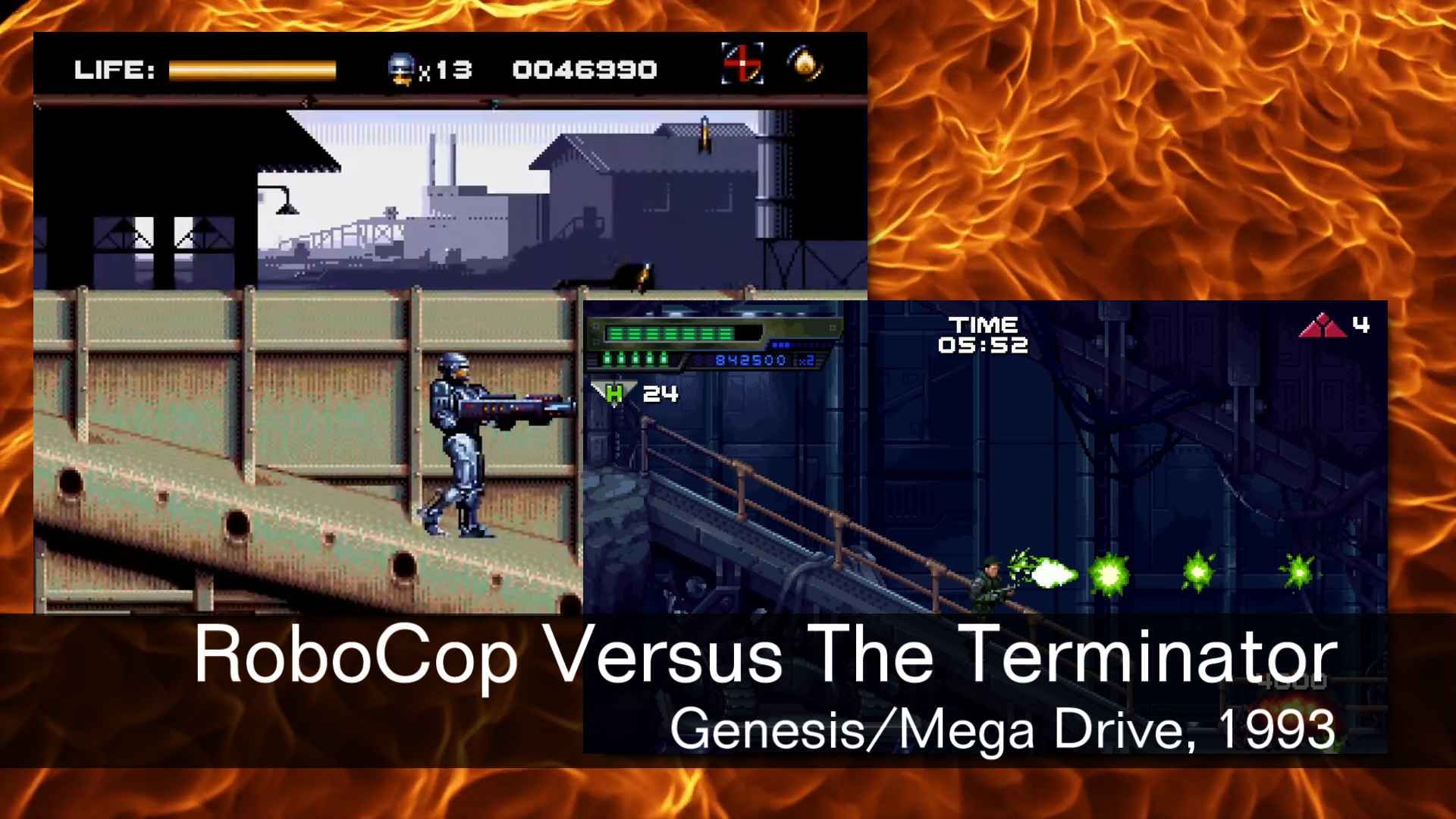
That game; especially on the Mega Drive; proved years ago that you could make a hard-edged, mechanically tight, cinematic action game set in this universe. Its weighty combat, deliberate pacing, and oppressive atmosphere are all clearly echoed in No Fate. The difference is that No Fate applies those ideas to a Terminator 2 structure; not just endless forward momentum, but rising stakes and narrative flow.
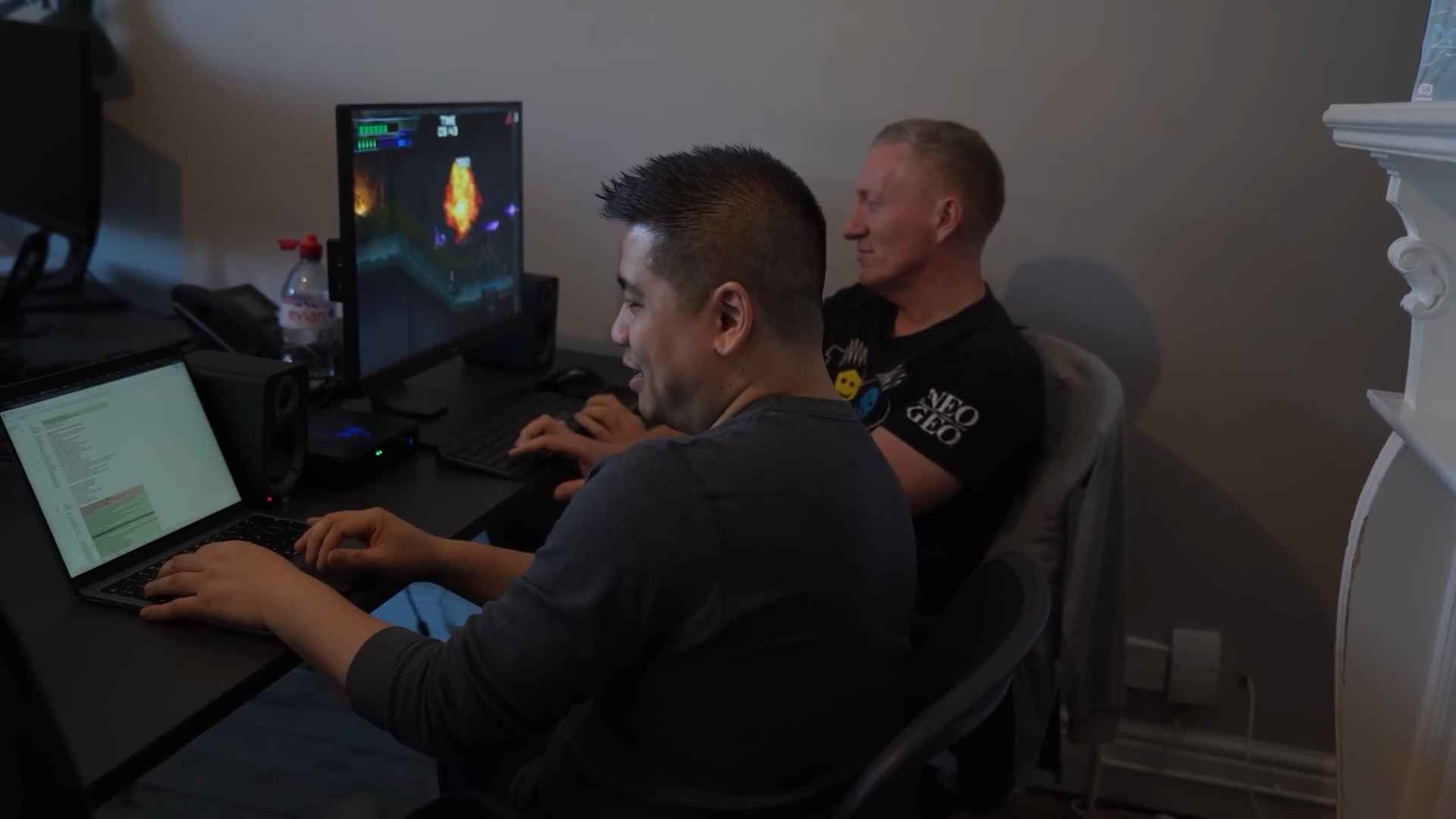
And unlike every earlier attempt, No Fate benefits from time. Four years of development. No film release deadline. No overly zealous publisher breathing down their neck. No need to guess what scenes looked like. No 128K memory ceiling, and multi-load cassette format forcing compromise after compromise.
It understands why the older games struggled. And it consciously avoids those traps.
It also doesn’t jump playstyles unnecessarily. This is delightfully packed platforming. It doesn’t pad scenes just because they’re playable. It doesn’t confuse spectacle with substance.
It does what the NES and Master System versions never attempted.
What the SNES and Mega Drive versions never fully achieved.
And what the Ocean microcomputer games were desperately trying to do with half a script and six months on the clock.
So yes; if you wanted a genuinely good Terminator 2 game; it turns out you really did have to wait 34 years.
Not because nobody tried.
But because this is the first time anyone was actually allowed to finish the job.
It’s pretty impressive what you can achieve when you have, no fate.
Until next time, I’ve been Nostalgia Nerd.
Toodleoo!

Nostalgia Nerd is also known by the name Peter Leigh. They routinely make YouTube videos and then publish the scripts to those videos here. You can follow Nostalgia Nerd using the social links below.